

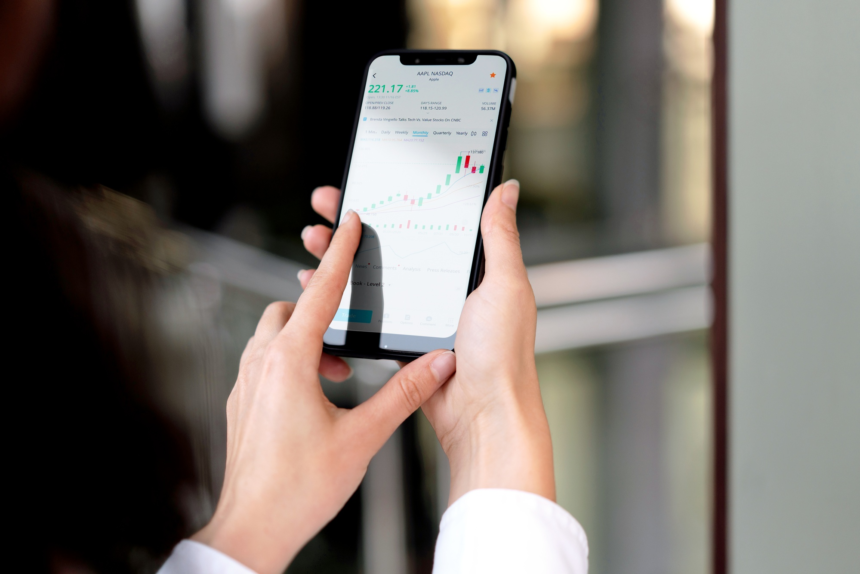
Transitioning manual strategies to algorithmic trading apps requires codifying rules, verifying SEBI compliance, backtesting historical tick data, paper trading in sandboxes, and establishing automated risk controls. These steps protect capital and eliminate emotional errors across dynamic Indian financial markets.
Key Takeaways
- Codify manual entry and exit rules into unambiguous quantitative triggers.
- Verify SEBI compliance, static IP mapping, and broker API security.
- Backtest strategies using historical tick data accounting for STT and slippage.
- Deploy pre-trade risk controls and kill switches to safeguard equity.
Transitioning from manual discretionary trading to automated execution across Indian financial markets requires a systematic shift in mindset and technical preparation. With SEBI enforcing structured algorithmic trading guidelines across the NSE and BSE, retail traders must adapt their manual edge into machine-executable logic.
Automating your strategy eliminates emotional bias, reduces order fill latency, and ensures strict risk management across volatile Nifty and Bank Nifty sessions. Following crucial transition rules guarantees a seamless move from manual charts to resilient, rule-based execution.
1. Codify Discretionary Rules into Precise Quantitative Logic
Manual trading often relies on subjective market intuition that computers cannot interpret. You must convert subtle chart observations into unambiguous mathematical formulas for entries, exits, and position sizing.
Connecting your strategy to modern Algorithmic Trading Apps requires defining strict price, volume, and volatility thresholds. Vague parameters cause execution errors or missed trade signals during fast-moving market sessions. Structuring precise rules ensures your strategy executes predictably without human hesitation.
2. Ensure Strict SEBI Regulatory Compliance and API Security
Automated trading in India operates under structured regulatory frameworks enforced by SEBI and domestic exchanges. Retail traders must use authorized broker API endpoints that support static IP whitelisting and daily OAuth authentication.
Selecting the Best Stock Trading App simplifies compliance by managing API keys and session tokens securely. Following official exchange guidelines protects your account from unauthorized access and regulatory penalties. Security-first architecture ensures stable connectivity during high-volatility market sessions.
3. Account for Real-World Friction and Statutory Costs
A backtested strategy on paper can quickly lose money if you ignore real-world execution friction. Indian equity and F&O segments incur brokerage fees, Securities Transaction Tax (STT), exchange charges, and GST.
Executing trades via Algorithmic Trading Apps means accounting for slippage and bid-ask spreads during market orders. Modeling these transaction costs into your initial logic prevents false profitability projections. Calculating net yields guarantees your strategy retains a statistical edge after accounting for fees.
4. Conduct Granular Historical Backtesting Across Regimes
Validating your strategy against multi-year historical price data is essential before risking live capital. Your model must be tested across trending, range-bound, and high-volatility market cycles on the NSE.
Using the Best Stock Trading App provides access to high-fidelity tick data for accurate strategy simulations. Historical backtesting reveals maximum drawdown limits and profit factor metrics across diverse market conditions. Thorough historical analysis prevents deploying flawed logic into live market environments.
5. Forward-Test Strategy Execution in a Simulated Sandbox
Paper trading in a simulated live-market environment is the ultimate bridge between backtesting and live deployment. Forward testing validates API responsiveness, webhook stability, and order fill timing without exposing capital to risk.
Testing your setup on reliable Algorithmic Trading Apps helps identify execution bottlenecks and software bugs under real-time conditions. Observing live order flow ensures that your strategy handles unexpected exchange latency smoothly. Virtual sandboxes build total confidence before transitioning to live capital allocation.
6. Implement Pre-Trade Risk Rules and Automated Kill Switches
Protecting your portfolio against rogue execution loops requires automated risk safeguards that operate independently. Pre-trade risk controls enforce strict limits on order size, maximum loss, and daily trade frequency.
The table below contextualizes key risk control safeguards that every trader should configure before transitioning from manual execution to automated systems.
| Risk Safeguard | Primary Function | Operational Target | Capital Protection Benefit |
| Max Drawdown Limit | Halts strategy automatically | Total Account Balance | Prevents catastrophic capital loss |
| Daily Loss Cap | Disables order placement | Intraday Equity P&L | Limits emotional revenge trading |
| Kill Switch | Cancels active pending orders | Emergency Shutdown | Prevents infinite loop execution |
Table: Risk Control Safeguards for Strategy Transition
Configuring these safeguards inside the Best Stock Trading App protects your portfolio during sudden market crashes. Automated kill switches guarantee disciplined risk enforcement even during severe intraday price volatility. Multi-layered protection ensures a single technical glitch never jeopardizes your core capital.
7. Scale Capital Incrementally During Live Transition
Deploying a newly automated strategy with maximum leverage is a recipe for unnecessary capital risk. Begin live trading with minimal lot sizes to verify real-world execution dynamics against theoretical expectations.
Gradually deploying capital through robust Algorithmic Trading Apps allows you to monitor slippage and order queue behavior safely. Incremental scaling confirms that live broker performance matches paper trading results. Increasing position sizes systematically protects trading equity while validating live strategy stability.
8. Monitor Strategy Drift and Maintain System Telemetry
Automating your execution does not mean abandoning continuous system oversight. Financial market structures evolve, causing strategy performance to drift away from historical backtest parameters.
Utilizing a feature-rich Best Stock Trading App gives you real-time alerts and telemetry dashboards to track active trades. Continuous monitoring allows developers to detect strategy degradation early and recalibrate indicator parameters proactively. Regular system audits ensure your automated edge remains consistent across changing market regimes.
Final Verdict
Transitioning your manual trading strategy to automated execution requires disciplined rule codification, SEBI compliance, rigorous backtesting, and robust risk management. Adopting these eight crucial rules protects your trading capital while unlocking systematic execution efficiency across Indian capital markets.
Elevate Your Trading Infrastructure
Take your market strategies to the next level by transitioning to disciplined automated execution today. Audit your strategy rules, test your risk parameters, and master systematic trading with complete confidence.