

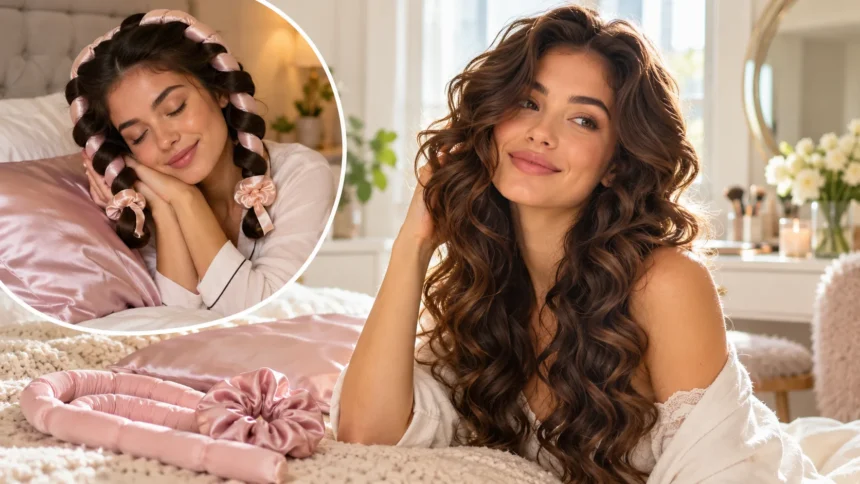
Want beautiful curls without using a curling iron or exposing your hair to high temperatures? Learning how to get overnight curls without heat is an easy way to style your hair while you sleep. With simple tools like socks, braids, soft curling rods, or a robe belt, you can wake up with beautiful waves and curls.
Heatless curling methods work with different hair lengths and textures, making them useful for everyday styling. Whether you prefer loose beach waves or defined curls, the right preparation and technique can make a noticeable difference. This guide explains the best overnight curling methods, practical styling tips, and common mistakes to avoid.
Why Overnight Heatless Curls Are Worth Trying
Overnight heatless curls are a convenient alternative to traditional curling tools because they allow your hair to take shape without high temperatures. Instead of relying on heated styling equipment, these methods use gentle tension and wrapping techniques. As your hair dries and settles into its new position, it can develop soft waves, natural-looking curls, or tighter spirals.
One major advantage of heatless hair curling is reducing frequent exposure to high temperatures that can contribute to dryness and breakage. Curling irons and straighteners can affect the hair cuticle when used excessively or incorrectly. Choosing overnight curling techniques may help limit heat-related damage while allowing you to experiment with different hairstyles.
Another benefit is the flexibility of these methods, especially for people with busy morning routines. You can prepare your hair before bedtime and finish styling it within minutes after waking up. Most techniques require affordable household items rather than expensive equipment, making heat-free curling an accessible option for different hair types and styling preferences.
How to Prepare Your Hair for Overnight Curls
Proper preparation is essential when learning how to get overnight curls without heat because the condition of your hair influences the final results. Start with clean, detangled hair that is dry or only slightly damp, depending on your chosen technique. Avoid wrapping soaking-wet hair, as it may remain damp overnight and prevent your curls from setting properly.
Apply a small amount of lightweight styling mousse or curl-enhancing product if your hair struggles to maintain its shape. Fine hair may benefit from a light formula that does not weigh down the strands, while thicker hair might need gentle moisturizing care. Distribute the product evenly through your lengths without applying unnecessary amounts near the roots.
Before wrapping, divide your hair into manageable sections using a wide-tooth comb or your fingers. Smaller sections generally encourage more defined curls, while larger sections tend to form loose, flowing waves. Make sure your hair feels smooth and free of tangles, as knots can become more difficult to remove after several hours of overnight styling.
Choose the Best Overnight Curling Method for Your Hair Type
Different hair textures respond differently to heatless curling techniques, so choosing a suitable method can improve your results. Naturally straight hair may need smaller sections and a little styling mousse to help curls hold. Wavy hair often responds well to braids or loose wrapping methods that encourage its existing texture without requiring excessive tension.
People with thick or long hair may prefer a soft curling rod, robe belt, or multiple fabric strips to distribute their hair evenly. These methods can accommodate longer sections while keeping the strands organized throughout the night. If your hair is particularly heavy, using several smaller sections may improve curl definition and prevent the wrapped hair from slipping.
Shorter hairstyles can also work with heatless curls, although some wrapping methods may be difficult when the hair cannot reach around a large rod. Small foam rollers, mini twists, or carefully secured pin curls can be useful alternatives. The best method ultimately depends on your hair length, natural texture, desired curl size, and comfort while sleeping.
How to Get Overnight Curls Without Heat Using a Robe Belt
A robe belt is a popular household tool for achieving soft, flowing curls without using heated equipment. Choose a smooth, clean fabric belt that is long enough to extend past your hair on both sides. Position the middle of the belt across the top of your head, allowing the ends to hang beside your face.
Take a small section of hair near your forehead and gently wrap it around the belt, moving away from your face. Continue adding more hair to each wrap as you work toward the ends, keeping the tension comfortable. Repeat the process on the opposite side until all your hair is wrapped around the fabric.
Secure each end with a soft scrunchie, making sure the belt stays in position without pulling tightly against your scalp. Leave the hairstyle in place overnight, provided it feels comfortable enough for sleeping. In the morning, remove the scrunchies, carefully unwind the sections, and separate the curls with your fingers for a soft, natural finish.
How to Make Overnight Sock Curls Step by Step
Sock curls are an affordable way to achieve heatless curls using items you probably already have at home. Choose clean, soft socks that are long enough to wrap your hair comfortably without pulling. Depending on your hair thickness and the curl size you want, you may need two, four, or more socks.
Divide your slightly damp or dry hair into several sections, then place a sock alongside one section. Wrap the hair around the sock from near the roots toward the ends, keeping the strands smooth as you work. Once the section is completely wrapped, tie or secure the sock gently so the hair remains in position.
Repeat this process with the remaining sections and check that none of the socks feels uncomfortable against your head. After sleeping, carefully unwrap each section without tugging or brushing through the curls immediately. Gently separate the curls with your fingers, allowing them to settle into a softer shape before applying a little lightweight finishing product.
How to Get Natural Overnight Waves with Braids
Braiding is one of the simplest ways to achieve overnight waves without heat, making it suitable for beginners. Start with detangled hair that is slightly damp, then divide it into two or more sections. Create loose or moderately firm braids, depending on whether you prefer relaxed waves or a more noticeable crimped texture.
For broad, soft waves, try one or two larger braids that begin lower down your head. If you want smaller, more textured waves, divide your hair into several sections and braid them individually. French or Dutch braids can encourage waves closer to your roots, although the final pattern depends on your natural hair texture.
Secure the ends with soft hair ties that will not catch or pull on the strands while you sleep. In the morning, remove each tie and gently loosen the braids from the bottom upward. Avoid aggressive brushing, as it can separate the wave pattern too much and make the finished hairstyle appear frizzy or uneven.
How to Use a Heatless Curling Rod Overnight
A heatless curling rod is designed to shape your hair into curls without using high temperatures. Most versions feature a long, soft structure that rests across the top of your head while hair wraps around either side. Choose a flexible design that feels comfortable and does not place unnecessary pressure on your scalp.
Begin by placing the curling rod over your head and securing it temporarily so it stays balanced. Starting near your face, wrap small sections of hair around the rod and gradually add more strands as you move downward. Continue until you reach the ends, then secure the wrapped hair with gentle scrunchies.
Repeat the same steps on the opposite side and adjust the rod if it feels too tight or heavy. When morning arrives, carefully release both sections and slide the rod away without pulling through the curls. You can leave the curls defined or gently separate them for additional movement, depending on your preferred hairstyle.
How to Get Loose Overnight Curls with Buns
Overnight buns are a practical choice if you prefer relaxed waves rather than tightly defined curls. This technique requires very little preparation and can work particularly well with medium-length or long hair. The size, placement, and number of buns influence how the hair bends and settles while you sleep.
Start by dividing your detangled hair into two or more sections and gently twisting each section into a loose rope. Coil the twisted hair into a bun and secure it with a soft scrunchie rather than a tight elastic. Repeat with the remaining sections, keeping the buns secure enough to stay in place without causing discomfort.
When you wake up, carefully undo the buns and let your hair fall naturally before making further adjustments. Use your fingers to separate any large sections and encourage a relaxed, flowing appearance. If your hair tends to lose its shape quickly, a small amount of styling product may help maintain the waves throughout the day.
Tips for Sleeping Comfortably with Heatless Curls
Comfort is an important part of overnight curling because a hairstyle that pulls against your scalp can disturb your sleep. Position curling rods, socks, or braids so they do not create uncomfortable pressure when your head rests on the pillow. Always prioritize gentle tension instead of tightly securing the strands to achieve stronger curls.
Soft materials can make overnight styling more comfortable, particularly when your hair is wrapped for several hours. Satin or silk pillowcases may help reduce friction between your hair and the pillow surface during sleep. A loose satin bonnet can also help keep wrapped sections organized, provided it fits comfortably and does not squeeze your scalp.
Avoid sleeping with heavily wet hair, especially when it is tightly wrapped inside thick fabric or multiple layers. Hair that remains damp for long periods may not set properly and can feel uncomfortable against your scalp. Allow your hair to become mostly dry before wrapping, and adjust your routine based on how quickly your hair naturally dries.
How to Remove and Style Overnight Curls in the Morning
Removing your overnight curls carefully is just as important as preparing them because rough handling can disturb the finished pattern. Begin by checking whether your hair feels completely dry, particularly around thicker sections and the roots. If it is still damp, give it additional time to dry before releasing the wrapped strands whenever possible.
Once your hair is ready, slowly remove the curling accessories without pulling or stretching the newly formed curls. Allow the curls to settle naturally for a few moments before separating them with clean fingers. For a fuller appearance, gently loosen the sections near the ends while avoiding excessive movement around the roots.
If you prefer soft, natural-looking waves, carefully finger-comb your hair rather than using a regular brush immediately. A small amount of lightweight serum may help smooth flyaways, particularly around the mid-lengths and ends. Finish with a flexible-hold hairspray if desired, using only enough product to support your hairstyle without making it feel stiff.
How to Make Overnight Heatless Curls Last Longer
Long-lasting heatless curls depend on several factors, including your natural hair texture, preparation routine, and styling products. Hair that is completely dry before unwrapping generally maintains its new shape more reliably than hair that remains damp. Using smaller sections or an appropriate lightweight setting product may also help support curl definition throughout the day.
Try to avoid repeatedly touching or brushing your curls after styling because excessive handling can cause them to loosen faster. Humid weather may also affect how long the curl pattern lasts, especially if your hair naturally becomes frizzy. A light finishing product suited to your hair type can help manage flyaways while maintaining movement.
If your curls begin relaxing during the day, consider refreshing individual sections with gentle finger coiling rather than restyling everything. You can also loosely gather your hair before bedtime to reduce friction and preserve some of the existing shape. Results vary between hair types, so experimenting with section sizes and products can help identify your most effective routine.
Common Mistakes to Avoid When Making Overnight Curls
One common mistake is wrapping hair while it is soaking wet and expecting it to become completely dry overnight. Thick sections and tightly wrapped fabric can slow the drying process, leaving curls uneven or poorly defined. For better results, start with mostly dry hair and use only a small amount of moisture when your chosen method needs it.
Another mistake is pulling your hair too tightly around curling accessories to achieve more dramatic results. Excessive tension can cause discomfort, tangling, and unnecessary stress on the hair strands and scalp. A secure but gentle wrap is usually enough, and any hairstyle that causes pain or noticeable pulling should be loosened immediately.
Using too much styling product can also make overnight curls look heavy, greasy, or less natural than expected. Begin with a modest amount and adjust according to your hair’s thickness and how well it holds a curl. Avoid changing several parts of your routine at once, as testing one adjustment at a time makes it easier to understand what works.
Conclusion
Learning how to get overnight curls without heat can make everyday hairstyling more convenient while helping you reduce unnecessary exposure to high temperatures. Methods such as sock curls, robe belt wrapping, braids, soft rods, and overnight buns all shape hair differently. Choosing the right technique allows you to experiment with curls and waves that suit your preferences.
The most effective routine begins with properly prepared hair, comfortable wrapping, and gentle handling in the morning. Keeping your hair mostly dry, selecting appropriate styling products, and avoiding excessive tension can improve the overall experience. Small changes in section size and wrapping direction can also influence how defined or relaxed your curls appear.
Remember that overnight heatless curling results vary depending on hair texture, length, and individual styling habits. Some techniques may work beautifully on your first attempt, while others may require practice and adjustments. With a little experimentation, you can discover a comfortable overnight curling method that fits your routine and helps you enjoy naturally styled hair.
Frequently Asked Questions
Can you get overnight curls without using any heat?
Yes, you can achieve overnight curls using socks, braids, buns, fabric belts, or soft curling rods. These methods shape your hair while it rests, although results depend on your natural texture and preparation.
Should your hair be wet or dry for overnight curls?
Mostly dry or slightly damp hair generally works best for many overnight curling techniques. Avoid soaking-wet hair because it may not dry completely while wrapped, leaving curls uneven or less defined.
How long do overnight heatless curls usually last?
Overnight heatless curls may last several hours or longer, depending on hair texture, humidity, and styling products. Using a lightweight setting product and minimizing brushing can help maintain their shape.
What is the easiest way to curl your hair overnight?
Loose braids are among the easiest overnight curling methods for beginners because they require minimal equipment. Simply braid mostly dry hair before sleeping and gently release the braids in the morning.
Can you make overnight curls without socks or curling rods?
Yes, you can use braids, loose buns, twists, or soft fabric strips to achieve overnight curls without special tools. Choose a comfortable method that suits your hair length and preferred curl pattern.