
Learning how to care for bleached hair is essential for maintaining softness, improving manageability, and keeping your chosen shade looking fresh. Fortunately, you do not need an expensive collection of products to care for lightened hair properly. Simple practices such as gentle washing, deep conditioning, reducing heat exposure, and avoiding unnecessary chemical treatments can make a meaningful difference over time.
Understand What Bleaching Does to Your Hair
Bleaching is a chemical process that lightens hair by breaking down its natural pigment, known as melanin. During this process, ingredients in the lightening formula alter the hair’s internal structure and protective outer layer. These changes can make strands more porous and vulnerable to moisture loss. Understanding how bleaching affects your hair helps you choose more appropriate maintenance products.
Hair porosity refers to how easily strands absorb and release water and other substances. Bleached hair often has increased porosity, which can contribute to dryness, roughness, tangling, and changes in color appearance. Severely processed strands may also lose strength and become more likely to break during brushing or styling. The level of damage varies depending on previous treatments and hair condition.
Although conditioning treatments can improve the appearance and manageability of bleached hair, they cannot completely reverse every structural change caused by lightening. This is why prevention and gentle handling are important parts of long-term maintenance. Building a consistent routine can reduce additional damage and improve how your hair feels. The goal is to support the condition of your existing strands.
Give Your Hair Extra Care After Bleaching
Freshly bleached hair may feel more delicate than usual, particularly when it has undergone substantial lightening. During the first several days, focus on gentle handling and observe how your hair responds to normal washing and styling. Avoid immediately adding unnecessary chemical treatments that could increase stress on processed strands. A simple maintenance routine is usually the best starting point.
Choose a gentle shampoo and moisturizing conditioner suited to chemically treated hair. If your hair feels unusually dry, a conditioning mask may help improve softness and reduce tangling. Avoid vigorous brushing, high-temperature styling, and hairstyles that pull tightly against the scalp. These precautions are especially useful when the hair feels fragile immediately after a lightening appointment.
Pay attention to your scalp as well as your hair during the days following bleaching. Persistent burning, swelling, blistering, or significant irritation should not be dismissed as a normal part of coloring. Avoid applying additional chemical products to an irritated scalp and seek appropriate medical advice when necessary. Comfortable scalp conditions are important for maintaining an enjoyable hair care routine.
Wash Bleached Hair With a Gentle Shampoo
Choosing the right shampoo is one of the most important steps in caring for bleached hair. Strong cleansing formulas may leave already processed strands feeling rough, dry, or difficult to detangle. A gentle shampoo designed for dry or color-treated hair can help remove dirt and buildup without unnecessary harshness. The best formula should suit both your scalp and hair texture.
Sulfate-free shampoos are commonly recommended for bleached hair because many are formulated to provide mild cleansing. However, not every sulfate-free product is automatically gentler than every shampoo containing sulfates. The complete product formulation determines how the cleanser performs. Choose a shampoo that leaves your scalp clean without making the lengths feel excessively dry or tangled.
When washing your hair, concentrate the shampoo mainly on your scalp rather than rubbing the lengths aggressively. Allow the cleanser and water to move naturally through the strands as you rinse. Use comfortably lukewarm water because very hot water may contribute to dryness. Finish with conditioner to improve softness and make your hair easier to manage.
Deep Condition Bleached Hair to Maintain Softness
Deep conditioning is a valuable part of a bleached hair care routine, particularly when strands feel dry or rough. Richer conditioning treatments contain ingredients that can improve softness, reduce friction, and make hair more manageable. Many people find that using a hair mask occasionally helps with detangling. The appropriate frequency depends on your hair’s individual condition.
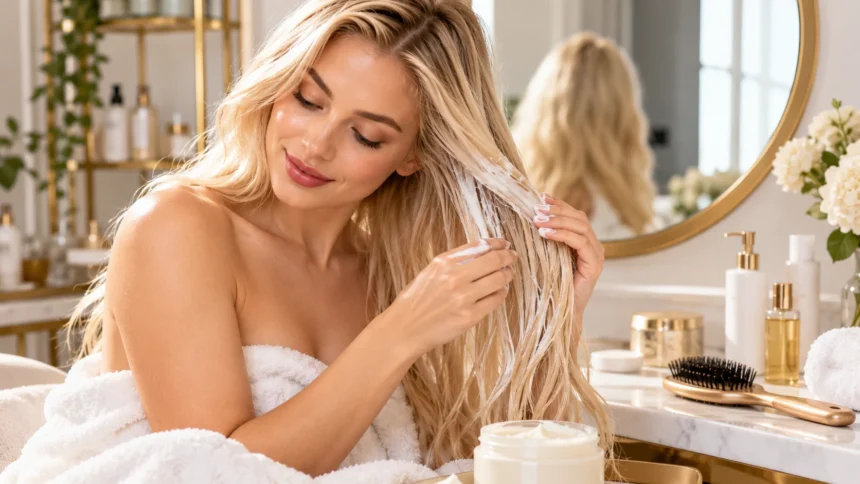
Apply a moisturizing hair mask primarily to the mid-lengths and ends, where chemical processing and everyday wear may be more noticeable. Follow the product instructions regarding application time and rinsing rather than automatically leaving it on overnight. Ingredients such as glycerin, fatty alcohols, and conditioning oils can help improve the way hair feels. Results vary among products and hair types.
Deep conditioning works best as part of a consistent routine rather than an occasional response to severe dryness. Continue using a regular conditioner after shampooing, even when you apply richer treatments on other days. If your hair starts feeling weighed down, consider switching to a lighter formula or reducing treatment frequency. Balance is more useful than applying excessive products.
Use Bond-Building and Protein Treatments Appropriately
Bleaching can affect the internal bonds and protein structure that contribute to hair strength. Some specialized treatments are designed to improve the condition of chemically processed strands through bond-focused or protein-based formulations. These products can be useful additions to a maintenance routine when selected appropriately. However, their effects vary, and no treatment can completely restore hair to its original untreated state.
Bond-building products are available in different formats, including conditioners, leave-in treatments, and professional salon services. Their ingredients and instructions differ considerably, so choosing a suitable product matters more than using multiple treatments together. Protein-containing conditioners may also improve the feel or manageability of certain damaged hair types. Follow the recommended frequency and observe how your hair responds.
Using more treatment products does not necessarily produce better results for fragile hair. Some formulas may leave strands feeling stiff, coated, or difficult to manage when they are unsuitable for your needs. Introduce products gradually and avoid layering several intensive treatments without understanding their purposes. If breakage persists, a qualified hairstylist can help assess the condition of your hair.
Reduce Heat Styling to Prevent Additional Damage
Excessive heat is one of the most common sources of additional stress for bleached hair. Straighteners, curling irons, and hot blow-drying can contribute to dryness, roughness, and breakage, especially when strands are already weakened. High temperatures may also affect the appearance of certain hair colors. Limiting unnecessary heat exposure helps maintain a more manageable hair texture.
When using styling tools, apply an appropriate heat protectant according to its instructions. Start with a lower temperature setting and avoid repeatedly passing heated tools over the same section of hair. Conventional flat irons and curling irons should generally be used on completely dry strands. These simple precautions help reduce avoidable damage during everyday styling.
Consider heat-free hairstyles whenever they suit your preferences and routine. Loose braids, soft rollers, and gentle overnight styling methods can create waves or texture without intense temperatures. When blow-drying, using controlled airflow and keeping the dryer moving can help limit concentrated heat exposure. Combining these habits with regular conditioning supports the long-term condition of bleached hair.
Detangle and Dry Bleached Hair Gently
Bleached hair can be more vulnerable to mechanical damage because chemical processing affects the protective outer surface. Aggressive brushing, tight hairstyles, and rough towel drying may increase friction and contribute to breakage. Wet hair can also be especially delicate, depending on its texture and condition. Handling your strands carefully helps prevent avoidable stress throughout your daily routine.
Begin detangling near the ends and gradually move upward, working through knots without force. A wide-tooth comb or suitable detangling brush can make this process easier. Apply conditioner or a detangling spray when extra slip is needed to separate strands comfortably. Different hair textures may respond better to detangling while damp, wet, or partially dry.
After washing, gently squeeze excess water from your hair instead of rubbing it aggressively with a towel. A soft microfiber towel or smooth cotton fabric can help absorb moisture while reducing friction. Avoid securing fragile hair tightly when it is wet or heavily tangled. Small improvements in washing and drying habits can support better hair manageability over time.
Protect Bleached Hair From Sun, Chlorine, and Saltwater
Bleached hair can be particularly sensitive to environmental exposure, including intense sunlight and swimming pool chemicals. Ultraviolet radiation can affect hair proteins and contribute to changes in artificial or natural pigments. Chlorinated water may also leave processed strands feeling dry or alter the appearance of certain shades. Protecting your hair outdoors helps limit additional stress.
Wearing a comfortable hat or scarf is a practical way to reduce direct sun exposure during long outdoor activities. Some leave-in products contain ingredients marketed for ultraviolet protection, although their effectiveness differs by formulation. Physical coverage remains a useful option when spending extended periods outside. Maintaining adequate conditioning can also improve comfort when environmental conditions leave hair feeling dry.
Before swimming, wet your hair with clean water and consider wearing a suitable swimming cap. Rinse thoroughly with fresh water afterward to help remove salt or pool chemicals. Follow with gentle cleansing and conditioning when appropriate. If light-colored hair develops an unusual greenish or dull appearance, seek advice about suitable mineral-removing products rather than repeatedly using harsh cleansers.
Maintain Blonde Tones Without Overusing Purple Shampoo
Bleached hair sometimes develops yellow, orange, or brassy-looking tones as artificial toners fade or underlying pigments become more noticeable. Purple shampoo is commonly used to help counter certain unwanted yellow tones in blonde or lightened hair. Blue toning products generally target some orange tones. Selecting the correct product depends on the shade and condition of your hair.
Purple shampoo contains violet pigments that temporarily influence the visible tone of light-colored strands. It is not intended to repair damage or replace a regular moisturizing shampoo. Using toning products too frequently may produce unwanted pigment buildup or leave hair feeling dry. Follow the manufacturer’s instructions and adjust usage according to your hair’s response.
Color-depositing conditioners and professional toning services are other options for maintaining a preferred shade. These approaches can be helpful when regular shampooing and environmental exposure gradually affect the color’s appearance. Avoid experimenting with multiple strong toning products when you are uncertain about the outcome. For significant color correction, consulting an experienced colorist is usually the safer choice.
Use Leave-In Conditioner and Hair Oils Wisely
Leave-in conditioners can be particularly useful for bleached hair that feels dry between washes. They help improve manageability, reduce tangling, and provide additional conditioning without requiring immediate rinsing. Some formulas also offer heat protection or other styling benefits. Choosing a lightweight or richer product depends on your hair texture and how easily your strands become weighed down.
Apply leave-in conditioner according to the product instructions, concentrating on sections that need additional softness. A suitable hair serum or small amount of oil may also help smooth the appearance of dry ends. Ingredients such as argan oil, coconut oil, and silicone-based conditioning agents are used in different hair products. Their suitability varies depending on the formula and individual hair characteristics.
Hair oils are useful for improving lubrication and appearance, but they cannot reverse all chemical damage caused by bleaching. Applying excessive oil may leave fine hair greasy or make product buildup more noticeable. Start with an appropriate amount and adjust based on your results. A straightforward combination of shampoo, conditioner, and one useful leave-in product may be sufficient.
Avoid Overlapping Bleach and Plan Touch-Ups Carefully
Repeated bleaching can increase the risk of breakage when new lightener overlaps previously processed hair. This is particularly important for individuals maintaining very light blonde shades or frequently changing their hair color. Previously lightened strands may already have reduced strength and increased porosity. Avoiding unnecessary repeated processing is an important part of protecting their condition.
Professional stylists can assess existing color, visible regrowth, and the general condition of your hair before recommending further lightening. The appropriate interval between appointments varies according to your hairstyle, coloring technique, and individual preferences. Some highlighting methods allow greater flexibility between services. Maintenance decisions should prioritize the condition of the hair rather than following an arbitrary schedule.
When maintaining bleached hair at home, avoid applying additional lightening chemicals simply to correct uneven results without professional guidance. Repeated experimentation can increase damage and may also irritate the scalp. Discuss realistic color goals and maintenance requirements with an experienced colorist before making major changes. Thoughtful planning supports a more manageable long-term hair coloring routine.
Build a Simple Daily Routine for Bleached Hair
A consistent daily routine can make bleached hair easier to manage without requiring numerous expensive products. Begin by paying attention to your scalp, hair texture, and how the strands respond to washing. Choose gentle cleansing products, suitable conditioners, and styling methods that minimize unnecessary friction. Adjust your routine when seasonal conditions or your hair’s needs change.
On wash days, focus on cleansing the scalp comfortably, conditioning the lengths, and detangling carefully. Between washes, use a suitable leave-in product when additional softness is needed and avoid unnecessary heat exposure. Loose hairstyles can help reduce tension on fragile strands during everyday activities. Regular attention to small habits is often more practical than complicated treatment schedules.
Check your ends periodically for signs of splitting, roughness, or persistent tangling that may benefit from trimming. Although trims do not repair internal damage, removing visibly frayed ends can improve the overall appearance and manageability of hair. Continue observing how your strands respond to different products and styling methods. A flexible, gentle routine supports the best possible condition of bleached hair.
Conclusion
Learning how to care for bleached hair begins with understanding that lightening changes the hair’s structure and increases its need for gentle handling. Moisturizing conditioners, suitable cleansing products, and careful detangling can improve softness and manageability. Protecting fragile strands from excessive heat and unnecessary chemical processing is equally important. Consistent care helps minimize additional damage.
The best bleached hair care routine does not need to involve numerous specialized treatments. Start with reliable essentials and introduce masks, leave-in conditioners, or bond-focused products when they suit your hair’s condition. Pay attention to scalp comfort and avoid aggressive styling practices that increase tension or friction. Simple, sustainable habits can make everyday maintenance easier.
Bleached hair requires individual care because the effects of lightening vary with natural texture, previous coloring, and treatment history. Some strands may need richer conditioning, while others respond better to lightweight products and minimal handling. With realistic expectations and thoughtful maintenance, you can preserve the appearance of your chosen shade while keeping your hair comfortable and manageable.
Frequently Asked Questions (FAQs)
How often should you wash bleached hair?
Wash bleached hair according to your scalp’s oil production and comfort rather than following a fixed schedule. Gentle shampoo and regular conditioning can help maintain cleanliness without unnecessarily drying processed strands.
Can damaged bleached hair become healthy again?
Conditioning and specialized treatments can improve softness, manageability, and some aspects of damaged hair. However, they cannot completely reverse every structural change caused by bleaching, and severely damaged sections may eventually need trimming.
Is coconut oil good for bleached hair?
Coconut oil can help reduce certain types of hair protein loss and improve lubrication for some people. Use it according to your hair’s needs, since heavy application may cause buildup or weigh down finer strands.
Should I use purple shampoo every time I wash bleached hair?
Not necessarily. Purple shampoo is intended to manage certain yellow tones rather than provide everyday conditioning. Follow the product instructions and use it according to your hair color and response.
What should I avoid after bleaching my hair?
Avoid unnecessary chemical processing, excessive heat, aggressive brushing, and tight hairstyles that stress fragile strands. Also avoid applying additional coloring chemicals to an irritated scalp or attempting repeated lightening to correct uneven results.