
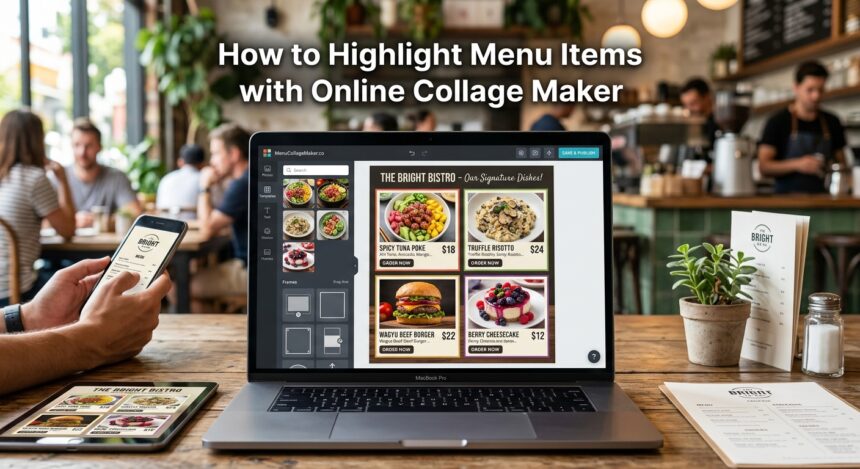
In this day and age, customers are more likely to see images of food before they ever read a menu meaning restaurants have their work cut out for them. A well-presented dish can pique curiosity, subtly convey quality, and compel somebody to walk in or order food. As a result, food photography and strong visual content have become essential restaurant marketing channels. Expensive design programs or professional graphic designers are not always necessary to create compelling menu graphics for the restaurant. An online collage maker can help restaurant owners and marketing teams to create simple layouts using food pictures, offer text, rates, and different branding materials. They can be used on social media, websites, digital menus, email campaigns or printed promo materials.
Why Visual Menu Promotion Matters
Food is naturally visual. My customers want to see a photo in order to introduce 1 dish before making an attempt. For instance, an image tells thousands of words like the ingredients used, the style in which it is presented, how much to eat at one go and whether or not a particular dish appeals to you. Visual menu promotions allow restaurants to showcase signature dishes, seasonal meals, chef specials, desserts, drinks and limited time offers. You can easily make a collage by combining your favorite photos into a creative and visually appealing design. A collage can display multiple connected visual items together, rather than just one photograph at a time. For instance, if a restaurant is running and propagating its Weekend brunch special, pancakes, eggs, fruit juice or just basic coffee-pastry could also come in the same design. This provides instant context on the brunch menu as well as an attractive promotional piece for the promotion.
Decide A Clear Theme For The Whole Collage
Restaurants should know what they want the visual to communicate before designing. While a collage could have multiple unrelated foods, it would be hard to communicate the main message of the restaurant to customers. The content is organised when there is a theme. Establishments may develop differing stylings for alternative groupings like breakfast, lunch specials, dinner entrees, deserts, beverages or a family meal. An example would be that a seafood restaurant may come up with grilled fish, prawns, oysters, and a seafood platter collaged together as a special. For example, a bakery could have a dessert oriented design with cakes, cookies, cupcakes and pastries. The theme should complement the food you serve and targeted clientele of course.
Select High Quality Food Photos
Photography is a significant part of the good menu promotions. A well designed collage falls flat if the photographs are too dark, fuzzy, poorly cropped or inconsistent. Restaurants ought to pick brilliant and sharp photographs portraying sustenance in appealing points. Natural lighting yields surprisingly good results, and using a plain background allows the focus to stay on the meal. We also want our images to be consistent with each other. For example, if one picture is set in a bright background and the other in a very dark setting, combining it may look uneven. As similar lighting, backgrounds, framing and image proportions as possible should be used for consistency in restaurants. This creates a more consistent look and feel across promotional materials.
Highlight Signature Dishes
Typically, every restaurant will have certain dishes that look the part of its identity. Think of your chef’s special, the customer favorite, a traditional recipe or special menu item. Collages provide a good way to display these signature dishes more prominently. The primary dish can take up a large section, while supplementary dishes can be in the smaller sections. An Italian restaurant could display its house-made pasta front and center in a design circled with garlic bread, salad, tiramisu and a signature drink. It would be a great use for the design to include some short descriptions. A #DT with a single sentence indicating the main ingredients or method of cooking can add more information to your customers while preventing visual clutter.
Text To Provide Key Details
Images catch the eye, but text gives customers context in order to make sense of what is being offered. Restaurants can write short headlines, names of dishes, prices or mention ingredients and advertise in designs. But text should still not be difficult to read. A collage with too many words creates a feeling of clutter and diminishes the strength of the shots of food. A good layout could be a bold title at the top, some food pictures in the middle area and brief descriptions or prices below each item. Restaurant logos and contact details can be set in less busy areas. We want a balance of photography and information.
Create Seasonal Menu Promotions
So, say for summer, you might use a combination of photographs of iced drinks and salads and grilled items and fresh fruit. For example, a winter design could concentrate on broths and stews, roasting dishes, steaming cups of chocolate or coffee and desserts. Consistently refreshing visual content can also provide former customers with renewed incentive to visit the restaurant’s social media pages.
Promote Limited Time Offers
To compel customers to take action right away. Using a collage to group multiple dishes from a limited time promotion but with an absolutely clear deadline. A restaurant may, for instance, publicize a family meal on the weekend that includes an entrée, sides, drinks and dessert. Rather than telling people everything on a huge social media caption, the restaurant can put the details into a visual layout directly. Some terms like “Weekend Special,” “Available This Week” or “Limited Menu” can take visitors very quickly to know the purpose of the promotion. Restaurants should verify the accuracy of dates, prices and availability prior to going live with such designs.
Maintain Consistent Restaurant Branding
Each promotional image should have a link to what the restaurant portrays overall. Branding helps customers to easily recognise content when they come across it online. Your restaurant can use its iconic logo, typography, colours and design style across marketing materials. For instance, a fine dining restaurants would use cleaner layouts and more minimal decoration while family style restaurant might use warmer fold in the template plus fun playful images. Restaurants can use an online collage maker to organize many images in an even manner. Reusable layouts can also speed up creating future promotions. If a restaurant has an optimal design structure, the same framework can be applied across menus and promotions alike.
Design Content for Social Media
One of the best places to share visuals of your restaurant menu is on social media. Restaurants can directly showcase dishes to potential customers through platforms like Instagram and Facebook. These collage designs can be used for posts or stories, promotional announcements and campaigns for special days. Restaurants should take the scale of every platform into account when creating their visuals, to ensure that vital information does not get cropped out. The initial part of the page should consist of visually appealing images or the primary animation message. This provides a break in the action, which catches user attention when they are scrolling through their feeds. Asking simple questions like which dish would you choose or if a particular special restaurant should bring back will also help restaurants get more interaction with their posts.
Develop Website and Digital Menu your graphics
Also, restaurant websites will benefit in having good menu visuals. Using a collage, you can showcase various categories before customers go on to view specific menu pages. The home page for example has different visual sections like starters, main course, desserts and drinks. By clicking through to a deeper menu, you’ll get a breakdown of the ingredients along with prices and allergen warnings, as well as ordering capabilities.
Make Designs Easy to Update
Because of this, you should be able to modify promotional designs easily. The restaurants are keeping re-usable templates instead of making every graphic again and again. The typical layout may include static branding, but photographs, names of dishes and their descriptions as well as the price can be modified when required. It is a time-efficient technique and leaves its mark on ensuring uniform campaigns. With a design refresh, restaurants need to examine every detail. Customers can be misled by an appealing picture accompanied by a misleading price or one that states the dish is not even available.
Tell a Food Story with Collages
You have been taught until October 2023. It can weave a narrative about the dining experience. For example, a restaurant might display the state of fresh ingredients, their preparation edible and plate it with another food dish followed by a dessert. This provides customers insight into what the restaurant will be like and, in some cases, how they approach food. Another way is to showcase a full meal starting with an appetizer and continuing all the way through main dish, drink, and dessert This is why restaurant marketing can be made memorable by storytelling; they will not simply see disconnected food photos. They are seeing how all the dishes fit into an experience.
Letting Customers Post Photos of Food
Restaurants incorporate customer generated content in their visuals Customers regularly photograph well-presented dishes and put them on social media. Specially selected images of guests captured during their visits can be stitched together by restaurants to create promotional collages (with permission). This not only gives real social proof, it also motivates others that dined with you during the same meal to upload their experience. Authorized use of customer photographs or names from social media, for instance in food reviews, should always be sought by restaurants beforehand.
Final Thoughts
Visual marketing provides restaurants with a tangible means of demonstrating food and illustrating menu options. Taste photos, testimonies, text that is easy to read and decipher from the phone screen, history behind your brand and branding will turn a simple photo and logo on your menu into advertising. College allows you to put together a selection of these elements without needing to know anything about graphic design, which is where an online collage maker may come in handy. Collages can be also used to showcase signature dishes, seasonal menus, limited time offers, desserts, drinks and even total dining experience in restaurants. They are the junction box between making the food look good, sharing information in a clear and functional way, and they represent a part of your restaurant identity. Restaurants can simply design these layouts and update them at regular intervals to have a constant supply of eye-catchy visual content for social media, websites, digital menus and promotional campaigns.