

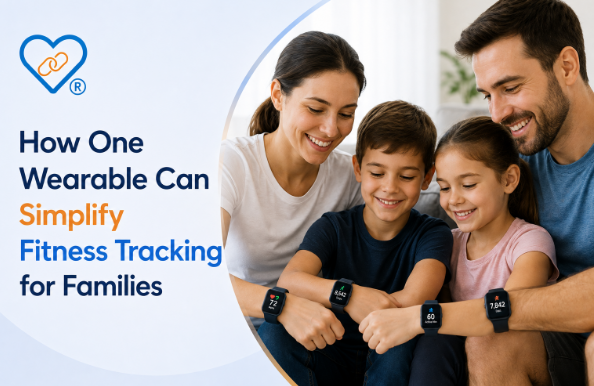
Keeping the whole family active can be easier when everyone has a simple way to understand their daily habits. From busy parents trying to fit movement into their schedules to children developing healthy routines, technology can make fitness tracking more convenient and engaging.
Modern wearable fitness devices bring activity information into one accessible place, helping families stay aware of movement, routines, and personal goals without making wellness feel complicated.
Making Family Fitness Easier to Manage
Family schedules can quickly become crowded with school, work, household responsibilities, hobbies, and social activities. Because of this, finding time for exercise is not always straightforward. A wearable can help by turning everyday movement into something people can easily notice and understand.
Instead of relying on occasional workouts alone, family members can pay attention to simple habits throughout the day. Walking to school, taking the stairs, playing outside, going for an evening walk, or completing a weekend activity can all contribute to a more active lifestyle.
The biggest advantage is convenience. A wearable can stay with the user throughout the day, allowing fitness information to be collected without requiring constant manual tracking.
One Device, Different Goals
Every family member may have a different idea of what staying active means. A parent may want to maintain a consistent walking routine, while a teenager may be interested in improving activity levels during sports. Younger family members may simply enjoy seeing their daily progress.
This makes personalization important. Rather than expecting everyone to follow the same routine, families can use wearable technology to support individual goals.
For example, family members might focus on:
- Daily movement and step goals
- Exercise duration and activity patterns
- Consistency across the week
- Personal fitness milestones
- Building healthier everyday routines
This approach can make fitness feel less like a competition and more like a shared family habit.
Encouraging Healthy Competition Without Pressure
A little friendly competition can sometimes make family activities more enjoyable. Parents and children may compare daily steps, challenge one another to take an evening walk, or set a shared weekend activity goal.
However, the goal should be encouragement rather than pressure. Not everyone has the same schedule, physical ability, interests, or energy level. A useful tracking system should help people understand their own progress instead of making them feel unsuccessful when they do not reach someone else’s target.
Families can also create group challenges that focus on participation rather than numbers. For example, everyone could agree to spend time outdoors together three evenings a week. The wearable then becomes a supporting tool rather than the center of the activity.
Turning Everyday Data Into Better Habits
One of the useful aspects of smart wearables is their ability to provide information that can encourage greater awareness. Looking back at activity patterns can help users notice when they tend to move more or become less active.
For families, this information can lead to practical conversations. If everyone spends long periods sitting during busy weekdays, the family might decide to add short walks between activities. If weekends are already active, they can build on those habits instead of creating an entirely new routine.
The important point is to use tracking information as a guide. Numbers can provide context, but they do not need to control every decision. Wellness is broader than a daily step count, and sustainable habits often come from small changes that fit naturally into everyday life.
Making Technology More Engaging for Different Ages
Technology can also help make fitness more interesting for younger family members. Progress indicators, achievable goals, and simple challenges can turn ordinary movement into an interactive experience.
For parents, the benefit may be convenience. Instead of maintaining separate notes or manually recording every activity, information can be available through a connected device or app.
A dream band wearable, for instance, can represent how wearable technology is moving beyond traditional fitness tracking by combining technology with broader wellness experiences. This creates opportunities for people to think about their daily habits from multiple perspectives rather than viewing fitness as a single number.
At the same time, parents should encourage children to use technology thoughtfully. The purpose should be to support healthy routines, curiosity, and participation rather than creating anxiety around performance.
Choosing the Right Approach for the Whole Family
Not every family needs the same features from a wearable. The best option depends on how each person intends to use it and what type of information is genuinely helpful.
Before choosing a device, families can consider:
- Whether the device is comfortable enough for regular use
- How simple the companion app is to understand
- Which activity features are actually useful
- Battery life and charging requirements
- Whether different family members can use the device comfortably
- How the device fits into existing routines
A complicated device may provide many features but still become frustrating if family members rarely use them. Simplicity can often be more valuable than having a long list of functions.
Building Wellness Around Real Life
Fitness tracking works best when it complements everyday life rather than becoming another responsibility. Families can use wearable technology to encourage walks after dinner, outdoor games, weekend activities, or simple movement breaks during busy days.
The technology itself does not create healthy habits. What matters is how people use the information it provides. When tracking becomes a tool for awareness and encouragement, it can help families make small, realistic adjustments that are easier to maintain.
The same principle applies to broader wearable technology. As devices become more integrated into everyday routines, families can explore ways to use them for motivation, mindfulness, productivity, and personal development while keeping technology practical and purposeful.
Conclusion
A wearable can give families a simple way to understand activity, set individual goals, and encourage one another without making fitness unnecessarily complicated. The most valuable approach is to use technology as a supportive tool while keeping real-world movement, family connection, and sustainable habits at the center.
With solutions such as Dirac Links, wearable technology can become part of a broader approach to personal wellness, helping people engage more intentionally with their everyday goals and routines. Ultimately, the best fitness technology is the kind that fits naturally into family life and makes healthy choices easier to maintain.