
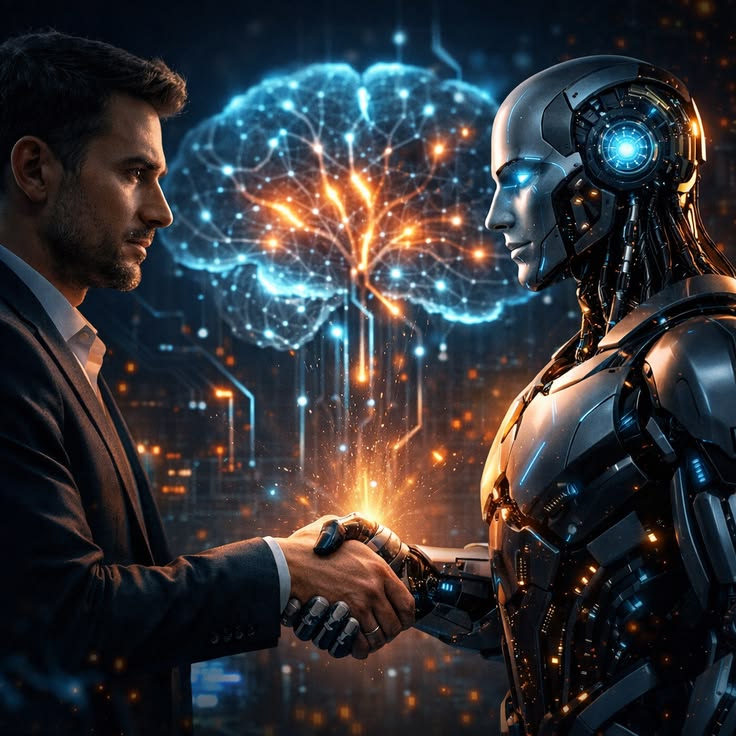
Artificial Intelligence (AI) is transforming nearly every business function, and Human Resources (HR) is no exception. Once focused primarily on administrative tasks, HR departments now use AI to improve recruitment, employee engagement, workforce planning, and talent development. By automating repetitive processes and providing data-driven insights, AI enables HR professionals to focus on strategic initiatives that create greater value for organizations.
As businesses continue embracing digital transformation, AI is becoming an essential tool for building efficient, inclusive, and employee-centered workplaces.
What Is AI in Human Resources?
AI in Human Resources refers to the use of machine learning, natural language processing, predictive analytics, and automation technologies to support HR functions. These systems analyze large amounts of employee and recruitment data to help organizations make faster and more informed decisions.
Rather than replacing HR professionals, AI enhances their ability to recruit talent, manage performance, improve employee experiences, and support business growth.
How AI Is Transforming Recruitment
Recruitment is one of the areas where AI has made the biggest impact.
Resume Screening
AI-powered software can quickly review thousands of resumes, identifying candidates whose skills and experience match job requirements. This significantly reduces the time recruiters spend on manual screening.
Candidate Matching
AI compares candidate profiles with job descriptions and recommends the most suitable applicants based on qualifications, experience, and skills.
Chatbots for Recruitment
AI chatbots answer candidate questions, schedule interviews, and provide application updates 24/7, improving communication throughout the hiring process.
Predictive Hiring
Some AI platforms analyze historical hiring data to predict which candidates are more likely to succeed and remain with the company long-term.
Improving Employee Onboarding
AI helps organizations deliver a smoother onboarding experience.
New employees can receive personalized training plans, digital documentation, automated task reminders, and instant answers to common questions through virtual assistants.
This reduces administrative work while helping new hires become productive more quickly.
Enhancing Employee Engagement
Employee satisfaction has become a key business priority, and AI offers valuable tools to monitor engagement.
Organizations use AI to:
- Analyze employee surveys
- Measure workplace sentiment
- Identify engagement trends
- Recommend personalized learning opportunities
These insights help HR teams address concerns before they affect productivity or retention.
AI in Performance Management
Traditional annual performance reviews are increasingly being replaced by continuous feedback supported by AI.
AI systems can:
- Track performance metrics
- Identify productivity patterns
- Suggest development opportunities
- Provide managers with performance insights
This creates a more objective and ongoing evaluation process.
Personalized Learning and Development
Every employee has different strengths and career goals.
AI-powered learning platforms recommend training courses based on an employee’s:
- Current skills
- Career aspirations
- Job role
- Performance data
Personalized learning helps employees continuously improve while supporting organizational skill development.
Workforce Planning and Analytics
AI enables HR leaders to make better workforce decisions through predictive analytics.
Organizations can forecast:
- Hiring needs
- Employee turnover
- Skill shortages
- Future workforce demands
- Department growth
This helps businesses prepare for changing market conditions and talent requirements.
Reducing Administrative Work
Many HR tasks involve repetitive administrative processes that AI can automate.
Examples include:
- Payroll assistance
- Leave management
- Benefits administration
- Employee record updates
- Interview scheduling
- Document processing
Automation allows HR professionals to spend more time on strategic planning and employee development.
Supporting Diversity and Inclusion
AI has the potential to reduce unconscious bias during recruitment by focusing on objective qualifications rather than personal characteristics.
Some AI systems anonymize resumes by removing names, gender, age, and other identifying information during the initial screening process.
However, organizations must carefully monitor AI systems to ensure they do not unintentionally reinforce existing biases in historical data.
AI for Employee Retention
Retaining talented employees is a major challenge for many organizations.
AI helps predict employee turnover by analyzing factors such as:
- Job satisfaction
- Performance trends
- Workload
- Promotion history
- Engagement levels
HR teams can use these insights to address concerns before employees decide to leave.
Benefits of AI in Human Resources
Businesses adopting AI in HR experience several advantages.
Faster Hiring
AI reduces the time needed to identify qualified candidates and fill open positions.
Better Decision-Making
Data-driven insights improve hiring, promotions, workforce planning, and employee development.
Increased Productivity
Automation minimizes repetitive tasks, allowing HR teams to focus on strategic priorities.
Improved Employee Experience
Personalized communication, learning, and support create a more engaging workplace.
Cost Savings
Automating routine processes reduces administrative costs and improves operational efficiency.
Challenges of AI in HR
Despite its advantages, AI implementation also presents challenges.
Data Privacy
Organizations must securely manage employee data and comply with privacy regulations.
Algorithm Bias
AI models trained on biased historical data may unintentionally produce unfair hiring or promotion recommendations.
Transparency
Employees should understand how AI influences HR decisions to build trust and accountability.
Human Oversight
Important decisions regarding hiring, promotions, and disciplinary actions should always involve human judgment alongside AI recommendations.
The Future of AI in Human Resources
AI will continue evolving as technology advances.
Future developments may include:
- More advanced virtual HR assistants
- Personalized career planning
- AI-driven leadership development
- Real-time employee wellness monitoring
- Improved predictive workforce analytics
- Smarter talent marketplaces within organizations
Rather than replacing HR professionals, AI will increasingly serve as a decision-support tool that enables more strategic and people-focused management.
Best Practices for Implementing AI in HR
Organizations should follow several best practices when adopting AI.
- Use AI to support—not replace—human decision-making.
- Regularly audit AI systems for fairness and bias.
- Protect employee data with strong security measures.
- Be transparent about how AI is used.
- Continuously train HR professionals to work effectively with AI technologies.
Conclusion
Artificial Intelligence is reshaping Human Resources by improving recruitment, onboarding, employee engagement, workforce planning, and talent development. By automating routine tasks and providing valuable insights, AI enables HR professionals to focus on creating better workplace experiences and supporting organizational growth.
While challenges such as data privacy, bias, and transparency remain important, responsible AI implementation offers significant opportunities for businesses seeking to build more efficient, inclusive, and future-ready HR departments.
Frequently Asked Questions (FAQs)
1. What is AI in Human Resources?
AI in HR involves using artificial intelligence technologies to automate processes, analyze workforce data, and improve HR decision-making.
2. How does AI improve recruitment?
AI speeds up resume screening, matches candidates to job requirements, automates interview scheduling, and improves communication through chatbots.
3. Can AI replace HR professionals?
No. AI supports HR professionals by handling repetitive tasks and providing insights, while people continue to make strategic and relationship-focused decisions.
4. What are the biggest benefits of AI in HR?
Key benefits include faster hiring, improved productivity, better workforce planning, personalized employee development, and enhanced decision-making.
5. What challenges does AI present in HR?
Common challenges include data privacy concerns, algorithm bias, transparency, regulatory compliance, and the need for ongoing human oversight.
6. What is the future of AI in Human Resources?
AI is expected to deliver more personalized employee experiences, advanced workforce analytics, smarter talent management, and greater automation while complementing human expertise.