

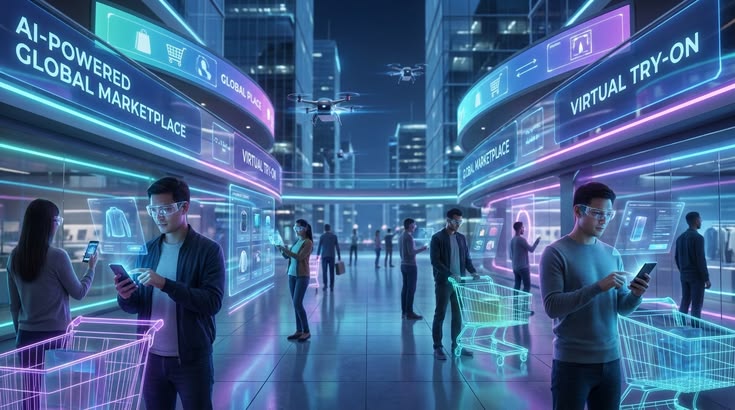
The future of e-commerce is being shaped by more than faster websites and convenient mobile applications. Artificial intelligence, social commerce, automation, immersive product experiences and changing customer expectations are transforming how people discover, compare and purchase products.
Online shopping is no longer a simple journey from a search engine to a product page and checkout. Customers may discover an item in a short video, compare it through an AI assistant, check reviews on a marketplace and complete the purchase through a mobile wallet. Google reports that eight out of ten online purchase journeys now involve multiple touchpoints, showing how fragmented and interconnected digital shopping has become.
For retailers, these changes create significant opportunities. However, they also introduce new challenges involving customer trust, data privacy, delivery expectations, platform dependency and rapidly evolving technology. Businesses that understand the latest online shopping trends will be better positioned to remain visible, competitive and profitable.
What Does the Future of E-Commerce Look Like?
The next stage of e-commerce will be more intelligent, conversational and integrated into consumers’ everyday digital activities. Rather than requiring shoppers to manually browse hundreds of product pages, digital platforms will increasingly understand their needs and present relevant options automatically.
Online stores will also serve two types of customers: human shoppers and AI systems acting on their behalf. Product data, inventory information, pricing, reviews and delivery details will need to be understandable by both people and machines.
At the same time, customers will continue demanding affordable prices, reliable delivery, flexible payment methods and transparent returns. Technology may improve the experience, but convenience, value and trust will remain the foundations of successful online retail.
1. Agentic Commerce Will Change How People Buy Products
One of the most important e-commerce trends in 2026 is the development of agentic commerce. This refers to AI agents that can complete shopping tasks on behalf of customers.
Instead of simply recommending a product, an AI shopping agent may:
- Understand a customer’s requirements
- Search multiple retailers
- Compare prices and specifications
- Review delivery times
- Apply available discounts
- Place an order with authorization
- Track the shipment
- Manage returns or repeat purchases
This development could shorten the traditional sales funnel dramatically. A customer may no longer visit several websites, read dozens of pages and manually compare products. The AI agent may perform most of those actions within seconds.
Research published by the National Retail Federation and IBM found that 41% of surveyed consumers were already using AI assistants for product research, while 33% used them to find reviews and 31% used them to search for deals.
This means future e-commerce websites must become agent-ready. Retailers will need accurate product feeds, structured data, clear attributes, real-time inventory information and reliable checkout systems so that AI platforms can understand and recommend their products.
2. AI-Powered Personalization Will Become More Advanced
Personalization has been part of online retail for years, but its capabilities are expanding rapidly. Traditional recommendation engines usually rely on previous purchases or browsing history. Modern AI systems can interpret a broader combination of signals, including:
- Search behavior
- Product preferences
- Budget limitations
- Location
- Purchase frequency
- Preferred brands
- Current context
- Customer support interactions
- Returns history
This allows retailers to provide more relevant product recommendations, landing pages, emails, offers and search results.
For example, a customer searching for running shoes may receive different recommendations depending on whether they are a beginner, a marathon runner or someone looking for casual footwear. AI can identify these differences through conversational questions rather than relying only on broad product categories.
The 2026 DHL E-Commerce Trends Report found that 38% of shoppers and 36% of businesses were already using AI-powered chat or virtual assistants for buying and selling. The report surveyed 29,000 shoppers and 5,800 e-commerce businesses across 29 countries.
However, effective personalization must remain transparent. Customers are likely to reject experiences that feel intrusive, manipulative or based on excessive data collection. The future of personalized shopping will therefore depend on balancing relevance with privacy.
3. Social Commerce Will Become a Complete Sales Channel
Social media is evolving from a product discovery channel into a complete shopping environment. Platforms such as TikTok, Instagram, Facebook and YouTube increasingly allow users to discover products, watch demonstrations, interact with creators and purchase without leaving the platform.
This trend is especially important for fashion, beauty, home décor, fitness, electronics and lifestyle products. These categories benefit from visual demonstrations, customer reactions and creator-led recommendations.
DHL’s 2026 research found that 63% of businesses sell through social channels, although only 45% of shoppers currently purchase through them. This difference suggests that retailers are investing in social commerce faster than many customers are adopting it.
European social commerce was valued at approximately €135 billion in 2025, according to PwC, with continued annual growth expected. PwC also notes that younger shoppers increasingly combine product discovery, comparison and purchasing within a single social-media experience.
To succeed in social commerce, brands will need more than promotional posts. They will need native product demonstrations, creator partnerships, shoppable videos, live events, reliable fulfilment and responsive customer service.
4. Mobile Commerce Will Remain the Dominant Shopping Experience
Mobile commerce is not a separate part of online retail anymore. For many customers, it is the primary way they browse and purchase products.
Successful mobile shopping experiences require:
- Fast-loading pages
- Responsive product layouts
- Large and accessible buttons
- Simple navigation
- Mobile-friendly product filters
- One-page or accelerated checkout
- Digital wallet integration
- Clear delivery information
- Minimal form fields
During the 2024 United States holiday shopping season, smartphones accounted for 54.5% of online transactions, compared with 51.1% during the previous year.
This trend demonstrates why designing for desktop first and adapting later is no longer sufficient. Businesses should develop their e-commerce experience around mobile behavior from the beginning.
The future of mobile commerce will also include visual search, voice-assisted browsing, biometric payments, location-aware offers and AI-powered shopping assistants.
5. Conversational Shopping Will Replace Complex Navigation
Customers frequently struggle with large product catalogs, technical filters and unclear categories. Conversational commerce provides a simpler alternative.
Instead of navigating several menus, a shopper may type:
“Find a lightweight laptop under $1,000 with strong battery life for video editing.”
An AI assistant can interpret the customer’s budget, use case and performance requirements before presenting suitable products. The customer can then refine the results through follow-up questions.
Conversational shopping may take place through:
- Website chat assistants
- Search engines
- Messaging applications
- Social-media platforms
- Voice assistants
- Independent AI shopping tools
This approach could make product discovery faster and more accessible, particularly for complex purchases involving electronics, appliances, software or financial products.
However, businesses must ensure that AI-generated recommendations remain accurate. Incorrect product information, hidden limitations or unreliable comparisons could quickly damage customer trust.
6. Search Optimization Will Expand Beyond Traditional SEO
Search engines will remain important, but customers are increasingly using AI assistants, social platforms, marketplaces and visual-search tools to discover products.
As a result, e-commerce businesses will need to optimize for several discovery environments:
- Traditional search engine optimization
- Marketplace search
- Social-media search
- Visual search
- Voice search
- AI answer engines
- Generative engine optimization
- Agentic product discovery
Product pages should provide complete, factual and well-structured information. Important attributes such as dimensions, materials, compatibility, warranty, availability, price and delivery time should be clearly identified.
Structured product data will become particularly important because AI agents require machine-readable information to compare items accurately. Businesses should also maintain consistent product details across their website, merchant feeds, marketplaces and social channels.
In the future of e-commerce SEO, visibility will depend not only on ranking webpages for keywords but also on making products understandable and trustworthy across multiple AI-driven platforms.
7. Augmented Reality and Virtual Try-Ons Will Reduce Purchase Uncertainty
One of the main weaknesses of online shopping is that customers cannot physically inspect products before buying them. Augmented reality and virtual try-on tools are helping reduce this uncertainty.
Customers can already use immersive technology to:
- Visualize furniture inside a room
- Try on glasses virtually
- Preview clothing styles
- Test cosmetic shades
- View products from different angles
- Measure whether an item fits a particular space
Google has introduced shopping experiences combining AI-powered guidance, product data and virtual try-on capabilities.
These technologies can improve customer confidence and potentially reduce returns caused by incorrect size, appearance or product expectations.
Nevertheless, retailers should treat immersive shopping tools as practical utilities rather than visual gimmicks. The experience must load quickly, work accurately and help customers make better purchasing decisions.
8. Omnichannel Retail Will Connect Online and Physical Shopping
Although e-commerce continues to grow, physical stores remain important. NRF and IBM’s 2026 consumer research found that 72% of surveyed consumers still shop in stores.
The future is therefore not exclusively online or offline. It is omnichannel.
Customers may research a product online and buy it in a store. They may inspect it in person and later order through an application. They may also purchase online and collect, exchange or return the product at a physical location.
Effective omnichannel features include:
- Buy online, pick up in store
- Reserve online, pay in store
- Real-time local inventory
- Ship from store
- In-store returns for online purchases
- Unified loyalty accounts
- Consistent pricing and promotions
- Customer service across multiple channels
Retailers that connect these systems can provide customers with greater flexibility while using physical locations as fulfilment, service and experience centers.
9. Flexible Payments Will Influence Conversion Rates
Payment options can determine whether a customer completes or abandons an order. Shoppers increasingly expect access to their preferred payment method, particularly when purchasing through mobile devices or international stores.
Important payment trends include:
- Digital wallets
- Buy now, pay later services
- One-click checkout
- Stored payment details
- Open banking
- Local payment methods
- Subscription billing
- Biometric authentication
DHL’s 2026 report identifies buy now, pay later, open banking, stored cards and gift cards as areas where growing shopper interest overlaps with business investment.
Retailers should not add every payment method without evaluation. Each option introduces costs, technical requirements and fraud considerations. The objective should be to provide the methods most relevant to the target market while maintaining a secure and straightforward checkout.
10. Delivery and Returns Will Become Competitive Advantages
Advanced marketing cannot compensate for unreliable fulfilment. Customers expect clear delivery dates, accurate tracking, reasonable costs and convenient return options.
Businesses should provide:
- Delivery estimates before checkout
- Multiple shipping options
- Real-time tracking
- Local collection points
- Simple return instructions
- Transparent return costs
- Fast refunds
- Proactive delay notifications
The 2025 DHL shopper study found that 81% of global shoppers abandoned their carts when their preferred delivery options were unavailable.
Subscription-based delivery and return programs are also becoming more common. DHL’s 2026 research found that 40% of surveyed shoppers and 53% of businesses had delivery and returns subscriptions. However, half of the shoppers who recently cancelled a subscription said it had become too expensive.
This indicates that customers value logistics convenience, but only when the subscription provides clear financial or practical benefits.
11. Subscription Commerce Will Expand Into More Categories
Subscription e-commerce is moving beyond entertainment, software and meal kits. Retailers are applying recurring purchasing models to beauty products, household supplies, pet products, clothing, health products and specialist services.
Subscription models can provide:
- Predictable recurring revenue
- Stronger customer retention
- Easier inventory planning
- Higher customer lifetime value
- More personalized product selection
DHL reports that 36% of surveyed shoppers hold product subscriptions, while only 24% of businesses currently offer them.
This gap represents an opportunity, but subscriptions must provide genuine convenience. Customers should be able to pause, modify or cancel easily. Inflexible billing and complicated cancellation processes can undermine trust and increase complaints.
12. Sustainable and Circular Commerce Will Gain Importance
Sustainability is increasingly influencing product selection, packaging, fulfilment and returns. Customers want businesses to reduce unnecessary waste and provide clearer information about how products are manufactured and delivered.
Future e-commerce models may include:
- Recyclable or minimal packaging
- Consolidated deliveries
- Carbon-conscious shipping choices
- Product repair programs
- Refurbished products
- Resale marketplaces
- Rental models
- Trade-in programs
- Transparent sourcing information
Circular commerce is particularly relevant because it combines environmental goals with affordability. Customers can purchase used or refurbished products at lower prices, while businesses can extend product life cycles and create additional revenue streams.
However, sustainability claims must be specific and verifiable. Vague environmental language can appear misleading and expose brands to reputational or regulatory risks.
13. Customer Trust, Privacy and Security Will Become More Valuable
As AI systems collect and analyze more customer information, privacy and security will become central to the future of online shopping.
NRF and IBM found that 52% of surveyed consumers were comfortable sharing data, but 83% reported overlapping concerns involving privacy, misuse and unwanted marketing.
Retailers will therefore need to explain:
- Which customer data they collect
- Why the information is needed
- How it improves the shopping experience
- Whether it is shared with third parties
- How long it is stored
- How customers can modify or delete it
Security systems must also distinguish between malicious bots and legitimate AI agents shopping with customer authorization. As agentic commerce grows, retailers may need new authentication, fraud prevention and authorization standards.
Trust will not be created through technology alone. Clear policies, accurate product descriptions, verified reviews, reliable delivery and responsive customer support will remain essential.
How Businesses Can Prepare for Future E-Commerce Trends
Businesses do not need to implement every emerging technology immediately. They should focus on improvements that solve genuine customer problems and support measurable commercial objectives.
Improve Product Data
Create complete product descriptions with accurate specifications, prices, availability, images, compatibility details and delivery information. Use appropriate structured data so search engines and AI systems can understand the content.
Build a Mobile-First Experience
Review the store on different mobile devices. Improve page speed, product navigation, checkout forms and payment options.
Integrate Sales Channels
Keep product information and inventory synchronized across the website, marketplaces, social platforms and physical stores.
Use AI Strategically
Start with practical applications such as customer service, product recommendations, internal search, fraud detection or demand forecasting. Human oversight should remain available for sensitive or complex situations.
Strengthen Customer Trust
Publish clear delivery, return, privacy and refund policies. Avoid misleading reviews, hidden fees and exaggerated sustainability claims.
Measure Customer Friction
Track search exits, cart abandonment, payment failures, delivery complaints and returns. These indicators can reveal more valuable opportunities than adding fashionable technology without a clear purpose.
Challenges Facing the Future of Online Shopping
The rapid development of e-commerce will also create significant challenges.
Small retailers may struggle with technology costs and dependence on large marketplaces. AI-generated product recommendations may favor established brands with stronger data and broader digital visibility. Fraudsters may use automation to create fake reviews, counterfeit listings or deceptive customer-service interactions.
Cross-border businesses must manage different regulations, taxes, delivery networks and payment preferences. Retailers must also decide how much control they are willing to give third-party platforms and AI shopping agents.
For these reasons, successful e-commerce strategies will require technical innovation, operational discipline and strong governance.
Frequently Asked Questions
What is the future of e-commerce?
The future of e-commerce will involve AI-assisted product discovery, agentic shopping, social commerce, mobile-first experiences, personalized recommendations and stronger integration between online and physical retail.
What is the biggest online shopping trend in 2026?
Agentic commerce is one of the most significant trends. AI agents are beginning to research, compare and purchase products on behalf of customers. Social commerce, mobile checkout and AI personalization are also major developments.
How will artificial intelligence affect online shopping?
AI will help customers search for products, compare options, receive personalized recommendations and complete purchases. Retailers will use it for customer support, pricing, inventory planning, fraud detection and marketing optimization.
Will social media replace traditional e-commerce websites?
Social platforms may replace websites for some discovery and purchasing activities, but brand websites will remain important for product information, customer relationships, organic search visibility and direct control over transactions.
What is agentic commerce?
Agentic commerce is a shopping model in which AI systems perform actions for customers. An agent may search products, compare prices, check reviews, apply discounts and complete an authorized transaction.
Why is mobile commerce important?
Mobile devices account for a large share of online browsing and transactions. A slow or complicated mobile experience can reduce rankings, conversions and customer satisfaction.
How can an e-commerce website prepare for AI search?
Retailers should provide accurate product data, descriptive attributes, structured markup, reliable inventory information, transparent pricing and clearly documented policies. This helps AI systems understand and recommend products correctly.
Conclusion
The future of e-commerce will be defined by intelligent technology, connected shopping channels and rising customer expectations. AI agents may change how products are discovered and purchased, while social commerce, mobile shopping, immersive experiences and flexible fulfilment continue to reduce friction.
Despite these technological changes, the basic principles of retail will remain consistent. Customers will choose businesses that provide useful products, fair prices, convenient purchasing, reliable delivery and trustworthy service.
Retailers that combine these fundamentals with AI-readable product data, mobile-first design, omnichannel operations and responsible personalization will be best positioned to benefit from the next generation of online shopping.