

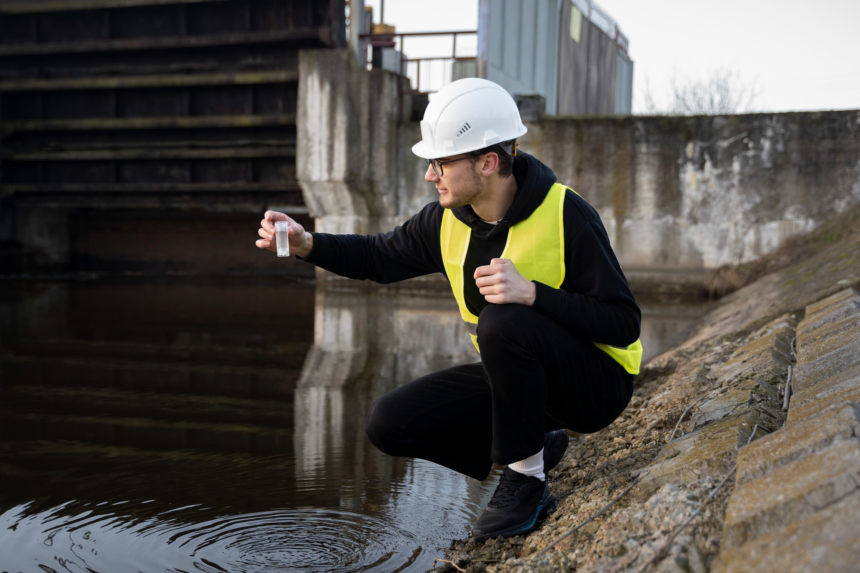
State and territory regulators heavily rely on the Australian Drinking Water Guidelines (ADWG) for governing residential bore water testing. The ADWG sets the absolute benchmark for safe water quality, outlining the maximum acceptable concentrations for chemical, physical, and microbiological contaminants, which property owners should test for annually if the water is used for drinking.
Key Takeaway
Bore water usage is quite common in Australia. Thousands of Australian households use this for irrigation, livestock, and in some cases, household use.
However, it is not treated like mains water. That means the risk of contaminants is much higher, posing a huge risk to health and wellness. As a result, this puts an additional responsibility for testing and monitoring falls on the property owner.
Understanding the guidelines that apply to residential bore water is important. And, getting it wrong carries real health and environmental risks. This is why our blog will guide you regarding all the
Why Bore Water Testing Matters
Bore water is drawn from groundwater aquifers beneath the surface. These aquifers are vulnerable to contamination from a range of natural and human sources.
Unlike mains water, bore water receives no centralised treatment. Contaminants can build up gradually and go undetected for years without regular testing.
This makes routine water bore monitoring a critical part of managing any residential bore.
What Contaminants Are Commonly Found in Bore Water?
The contaminants present in bore water vary depending on location, geology, and nearby land use.
Common contaminants found in residential bore water across Australia include:
- Nitratesare often linked to agricultural runoff and septic systems
- Heavy metals,including arsenic, lead, and manganese, from natural geology
- Bacteria,particularly E. coli and coliforms, from surface infiltration
- Hydrocarbonsfrom nearby industrial activity or fuel storage
- Salinity,high salt levels are common in WA and parts of SA
- Fluorideis naturally occurring at elevated levels in some aquifers
Not all of these are visible or detectable by taste or smell. Laboratory testing is the only reliable way to identify them.
What Do Australian Guidelines Say?
There is no single national standard that governs residential bore water testing. Responsibility sits with state and territory governments.
However, the Australian Drinking Water Guidelines (ADWG), published by the National Health and Medical Research Council (NHMRC), set the benchmark for what constitutes safe water quality.
These guidelines cover:
- Maximum acceptable concentrations for physical, chemical, and microbiological parameters
- Guidance on aesthetic quality like taste, colour, and odour
- Risk-based frameworks for managing water quality at the source
Where bore water is used for drinking or cooking, the ADWG is the primary reference document. Most state health departments and EPAs align their own guidance to it.
State-by-State Overview
Each state and territory applies its own framework for bore water use and testing.
| State/Territory | Key Regulator | Testing Requirement |
| Western Australia | DoH / DWER | Required for drinking use; guidelines issued by DoH |
| Queensland | DNRM / Queensland Health | Testing advised before use; regulated under Water Act 2000 |
| New South Wales | NSW Health / NRAR | Recommended testing before drinking use |
| South Australia | SA Health / DEW | Required if used for drinking; salinity thresholds apply |
| Victoria | DEECA | Guidelines under Safe Drinking Water Act 2003 |
Table: Different states, their ley regulators, and testing requirements
Regardless of state, bore water used for any domestic purpose should be tested before first use and retested at regular intervals thereafter.
How Often Should Bore Water Be Tested?
Testing frequency depends on how the bore water is being used.
- For drinking and cooking use, test annually at a minimum; more frequently if land use nearby changes
- For irrigation and garden use, test every two to three years, or after nearby contamination events
- For livestock watering, test annually; livestock are sensitive to nitrate and salinity levels
- For post-flood or post-drought conditions, test immediately, as aquifer conditions can shift significantly
Any change in the water’s appearance, taste, or odour should prompt immediate testing, regardless of the scheduled interval.
What Parameters Should Be Tested?
A basic bore water test covers microbiological and key chemical parameters.
A comprehensive test for residential use should include:
- Total coliforms and E. coli
- Nitrate and nitrite levels
- pH and electrical conductivity
- Heavy metals, including arsenic, lead, iron, and manganese
- Hardness and salinity
- Turbidity
If the property is near agricultural land, industrial sites, or former mining areas, additional parameters may be warranted. This is where broader environmental site assessments help identify what specific risks need to be tested for.
What Are the Health Risks of Untested Bore Water?
Using contaminated bore water without testing carries real consequences.
Health risks associated with untested bore water include:
- Gastrointestinal illness from bacterial contamination
- Neurological effects in children from elevated nitrate levels
- Long-term exposure to heavy metals such as arsenic and lead
- Skin and eye irritation from high salinity or chemical content
Vulnerable groups, including infants, pregnant women, the elderly, and immunocompromised individuals, face greater risk from the same contaminant levels that may not immediately affect healthy adults.
What Happens After Testing?
If test results fall outside acceptable limits, the property owner has several options depending on the contaminant type and concentration.
Common responses include:
- Installing point-of-use filtration or reverse osmosis systems
- Disinfecting the bore casing and headworks
- Restricting use to non-potable applications, such as irrigation only
- Engaging remediation services to investigate and address the contamination source
- Sealing or decommissioning the bore if contamination is severe or the source cannot be controlled
Where contamination is linked to an external source like a neighbouring industrial site or legacy land use, remediation services may be required at a broader site level. This involves formal investigation and potentially regulatory involvement.
Water Bore Monitoring as an Ongoing Practice
Testing once at installation is not sufficient. Groundwater conditions change over time.
Nearby development, agricultural activity, and climate variability all affect aquifer quality. A bore that tested clean five years ago may show different results today.
Establishing a regular water bore monitoring schedule and keeping records of all test results gives property owners a defensible history. It also allows early detection of changes before they become serious health or compliance issues.
In Summation
A NATA-accredited laboratory should analyse bore water samples. NATA accreditation ensures the testing methods used are validated and the results are legally defensible.
When collecting samples, the correct procedure matters. Contamination during collection can produce inaccurate results and lead to unnecessary remediation or missed risks.
A qualified environmental consultant can assist with proper sample collection, appropriate parameter selection, and the interpretation of results against applicable guidelines.
Ready to Ensure Your Water is Safe?
Don’t risk your family’s health or the environment on guesswork. Get in touch with SERS today to learn how our expert water bore monitoring programs to protect your property.