

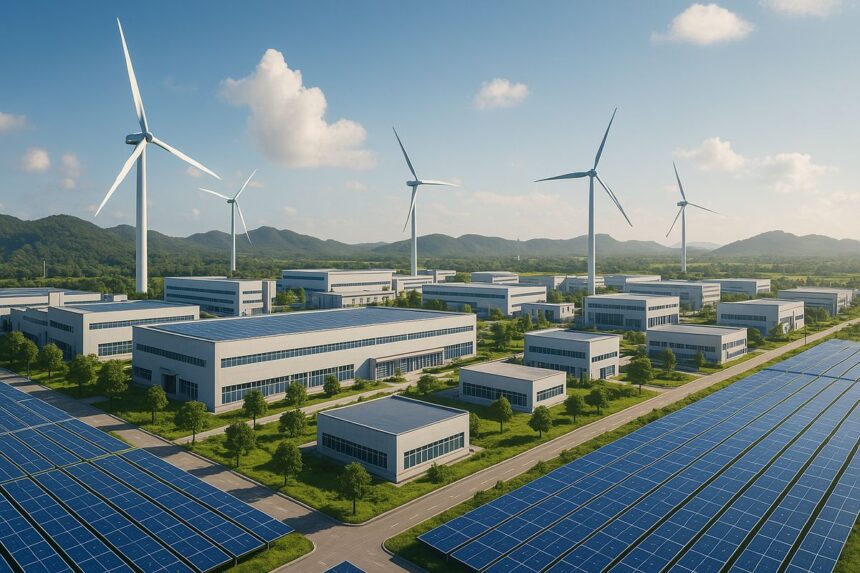
Renewable energy is becoming one of the most important solutions for meeting the world’s growing electricity demand while reducing greenhouse gas emissions and dependence on fossil fuels. Advances in technology, falling equipment costs, and increasing government and private-sector investment are accelerating the transition toward cleaner energy systems.
Solar panels, wind turbines, hydropower, geothermal energy, biomass, and emerging technologies are transforming how electricity is generated, stored, and distributed. At the same time, innovations in battery storage, smart grids, hydrogen production, and artificial intelligence are making renewable energy more reliable and efficient than ever before.
The future of renewable energy will not depend on a single technology. Instead, it will involve an integrated energy system where multiple renewable sources work together with advanced storage and intelligent power management.
What Is Renewable Energy?
Renewable energy comes from natural resources that are continuously replenished. Unlike fossil fuels such as coal, oil, and natural gas, renewable resources can produce energy without being permanently depleted.
The main renewable energy sources include:
- Solar energy
- Wind energy
- Hydropower
- Geothermal energy
- Biomass energy
- Ocean energy, including tidal and wave power
These energy sources generate electricity with significantly lower greenhouse gas emissions during operation compared to conventional fossil-fuel power plants.
Why Renewable Energy Is Growing
Several factors are driving the rapid growth of renewable energy technologies.
One of the biggest reasons is the declining cost of renewable energy equipment. Solar panels, wind turbines, battery systems, and power electronics have become more affordable due to technological improvements and large-scale manufacturing.
Governments around the world are also introducing policies that encourage renewable energy investment through tax incentives, research funding, renewable energy targets, and carbon reduction strategies.
Businesses are increasingly investing in clean energy to lower operating costs, improve energy security, and meet sustainability goals. Consumers are also adopting rooftop solar systems, electric vehicles, and energy-efficient technologies.
As electricity demand continues to rise, renewable energy offers a practical way to expand power generation while reducing environmental impacts.
The Future of Solar Energy
Solar energy is expected to remain one of the fastest-growing renewable technologies.
Modern photovoltaic panels convert sunlight directly into electricity with higher efficiency than earlier designs. Researchers continue to develop advanced solar cells using materials such as perovskites, tandem cells, and bifacial modules that capture sunlight from both sides.
Future solar systems are likely to become lighter, more durable, and more efficient while requiring less installation space.
Building-integrated photovoltaics are another emerging trend. Instead of mounting panels on rooftops, solar cells may become part of windows, walls, roof tiles, and other building materials.
Floating solar farms are also becoming increasingly popular. Installed on lakes and reservoirs, these systems reduce land use while improving panel cooling and efficiency.
Artificial intelligence is expected to improve solar forecasting, maintenance scheduling, and power generation optimisation.
Advancements in Wind Energy
Wind power has become one of the world’s leading renewable electricity sources.
Modern wind turbines are significantly larger than earlier generations, allowing them to capture more energy from lower wind speeds. Improved blade designs, lightweight materials, and digital monitoring systems continue to increase efficiency.
Offshore wind farms represent one of the fastest-growing areas of renewable energy development. Offshore locations often provide stronger and more consistent winds than land-based sites.
Floating offshore wind turbines are expanding access to deeper coastal waters where conventional fixed foundations cannot be installed.
Future wind farms are expected to use artificial intelligence, predictive maintenance, and autonomous inspection drones to improve reliability and reduce maintenance costs.
The Growing Importance of Energy Storage
One of the biggest challenges facing renewable energy is variability. Solar panels produce electricity only during daylight hours, while wind turbines depend on weather conditions.
Energy storage technologies help solve this problem by storing excess electricity and supplying it when renewable generation decreases.
Lithium-ion batteries currently dominate large-scale energy storage, but researchers are developing alternative technologies, including sodium-ion batteries, solid-state batteries, flow batteries, compressed air storage, pumped hydro storage, and thermal energy storage.
Long-duration energy storage will become increasingly important as renewable energy provides a larger share of electricity generation.
Improved storage technologies will help maintain stable electricity supplies even during periods of low renewable generation.
Green Hydrogen as a Clean Energy Source
Hydrogen is attracting increasing attention as a future clean energy carrier.
Green hydrogen is produced by using renewable electricity to split water into hydrogen and oxygen through electrolysis. Unlike hydrogen produced from fossil fuels, green hydrogen generates little or no carbon emissions during production when renewable electricity is used.
Hydrogen may become particularly valuable for industries that are difficult to electrify, including steel production, chemical manufacturing, shipping, aviation, and heavy transport.
It can also store renewable electricity for long periods and support power generation when renewable resources are temporarily unavailable.
Although green hydrogen remains relatively expensive, technological improvements and larger production facilities are expected to reduce costs in the coming years.
Smarter Electrical Grids
Traditional electricity grids were designed for large central power stations supplying electricity in one direction.
Renewable energy requires a more flexible approach because electricity is increasingly generated by distributed sources such as rooftop solar systems, community wind farms, and battery storage.
Smart grids use digital communication systems, sensors, automated controls, and advanced software to balance electricity supply and demand more efficiently.
These technologies allow electricity providers to identify faults quickly, integrate renewable energy sources, improve grid reliability, and reduce transmission losses.
Consumers may also benefit from smart meters that provide detailed information about electricity usage and allow participation in demand-response programmes.
Artificial Intelligence in Renewable Energy
Artificial intelligence is becoming an important tool for renewable energy management.
AI systems can analyse weather forecasts, electricity demand, equipment performance, and historical operating data to improve decision-making.
For example, AI can predict solar power output based on cloud cover, estimate wind generation using weather models, and optimise battery charging schedules.
Machine learning also supports predictive maintenance by identifying unusual equipment behaviour before failures occur.
As renewable energy systems become more complex, AI will play an increasingly important role in improving efficiency, reducing costs, and maintaining reliable electricity supplies.
Renewable Energy in Transportation
The transport sector is undergoing a major transformation through electrification and renewable energy integration.
Electric vehicles are becoming more common as battery technology improves and charging infrastructure expands. Renewable electricity can power these vehicles, reducing dependence on gasoline and diesel.
Hydrogen fuel-cell vehicles may become important for heavy trucks, buses, trains, ships, and some industrial applications where battery systems may not always be practical.
Renewable energy is also supporting the production of sustainable aviation fuels and renewable fuels for shipping.
The combination of clean electricity and low-carbon fuels will help reduce emissions from transportation over the coming decades.
Decentralised Energy Systems
Future electricity systems are expected to become more decentralised.
Instead of relying entirely on large power stations, communities may generate electricity locally using rooftop solar panels, community wind projects, battery storage, and microgrids.
Microgrids can operate independently during emergencies, improving energy resilience during storms, natural disasters, or power outages.
Distributed renewable energy can also improve electricity access in remote areas where extending traditional power lines is expensive.
This approach increases energy security while reducing transmission losses.
Environmental Benefits
Renewable energy technologies offer several important environmental advantages.
They reduce greenhouse gas emissions, improve air quality, decrease dependence on fossil fuels, and lower water consumption compared to many conventional thermal power plants.
Renewable energy also supports efforts to reduce climate change by replacing high-emission electricity generation.
However, renewable technologies are not completely free of environmental impacts. Manufacturing solar panels, wind turbines, batteries, and electrical equipment requires minerals, metals, and energy. Responsible mining, recycling, and sustainable manufacturing practices will remain important.
Challenges Facing Renewable Energy
Despite rapid progress, renewable energy still faces several challenges.
Electricity generation depends partly on weather conditions, making storage and grid flexibility increasingly important.
Large renewable projects may require significant land, transmission infrastructure, and environmental assessments.
Critical minerals such as lithium, cobalt, nickel, and rare earth elements are needed for many renewable technologies, creating supply-chain challenges.
Governments, utilities, researchers, and manufacturers must continue improving recycling systems, battery technologies, transmission networks, and energy storage solutions to support long-term growth.
Emerging Renewable Energy Technologies
Several innovative technologies could shape the future of clean energy.
Perovskite solar cells have the potential to increase solar efficiency while reducing manufacturing costs. Floating offshore wind farms may unlock stronger wind resources in deeper waters.
Enhanced geothermal systems could expand geothermal power beyond traditional volcanic regions. Wave and tidal energy technologies continue to improve, offering additional renewable electricity sources for coastal areas.
Researchers are also developing advanced recycling methods for solar panels, wind turbine blades, and batteries to support a more circular renewable energy industry.
Although some of these technologies remain in early development, they could become increasingly important over the next few decades.
The Role of Governments and Businesses
Governments play a significant role in accelerating renewable energy adoption through policies, regulations, research funding, and infrastructure investment.
Businesses are investing in renewable electricity to reduce operating costs, strengthen energy security, and achieve environmental targets.
Financial institutions are also increasing investment in renewable energy projects, battery storage, hydrogen production, and electricity infrastructure.
Collaboration between governments, researchers, manufacturers, utilities, and consumers will be essential for building a sustainable energy future.
The Future Outlook
Renewable energy is expected to become an increasingly important part of global electricity generation.
Advances in solar panels, wind turbines, batteries, hydrogen, artificial intelligence, smart grids, and digital energy management will improve efficiency and reliability.
Rather than relying on one technology, future energy systems will combine multiple renewable sources with energy storage and intelligent control systems.
The transition will require continued investment, technological innovation, workforce development, and supportive public policies. However, the long-term benefits include cleaner air, greater energy security, reduced greenhouse gas emissions, and more sustainable economic growth.
Frequently Asked Questions
What is renewable energy?
Renewable energy is energy generated from naturally replenishing resources such as sunlight, wind, water, geothermal heat, and biomass.
Why is renewable energy important?
Renewable energy helps reduce greenhouse gas emissions, improves air quality, decreases dependence on fossil fuels, and supports long-term energy security.
Which renewable energy source is growing the fastest?
Solar energy has experienced some of the fastest global growth due to falling equipment costs, improving efficiency, and widespread installation across residential, commercial, and utility-scale projects.
What is green hydrogen?
Green hydrogen is hydrogen produced by using renewable electricity to split water through electrolysis. It is considered a low-carbon fuel when powered by renewable energy.
Why is battery storage important?
Battery storage stores excess renewable electricity and supplies it when solar or wind generation decreases, improving grid reliability.
How does artificial intelligence support renewable energy?
AI analyses weather forecasts, electricity demand, equipment performance, and historical data to optimise power generation, predict maintenance needs, and improve grid management.
What are smart grids?
Smart grids use digital technologies, sensors, and automated controls to balance electricity supply and demand while integrating renewable energy more efficiently.
Can renewable energy completely replace fossil fuels?
Renewable energy can significantly reduce dependence on fossil fuels, but achieving a fully renewable energy system will require continued advances in storage, transmission, grid management, and supporting technologies.
What are the biggest challenges facing renewable energy?
Key challenges include weather variability, energy storage, transmission infrastructure, critical mineral supplies, land use, and recycling of renewable energy equipment.
What does the future of renewable energy look like?
The future will likely include more efficient solar panels, larger offshore wind farms, advanced battery storage, green hydrogen, intelligent power grids, artificial intelligence, and increasingly decentralised energy systems.
Conclusion
Renewable energy technologies are transforming the global energy landscape. Improvements in solar power, wind energy, battery storage, hydrogen production, and smart electricity networks are making clean energy more reliable, affordable, and accessible.
Although challenges remain, continued innovation and investment are accelerating the transition toward sustainable energy systems. As governments, businesses, and consumers embrace renewable technologies, the future of energy will become cleaner, more efficient, and better equipped to meet the world’s growing electricity needs while protecting the environment.