

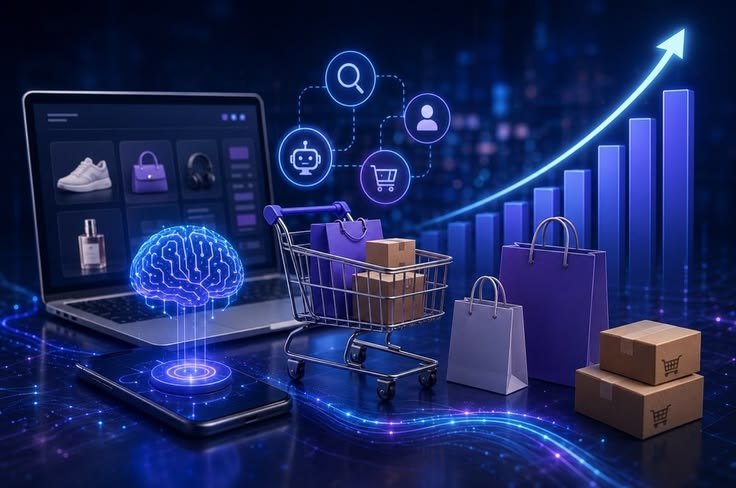
Digital commerce has transformed the way people shop, compare products, and interact with brands. From online marketplaces and mobile shopping apps to artificial intelligence (AI) and cashier-less stores, technology is reshaping every aspect of the retail industry. Consumers now expect personalized experiences, fast deliveries, secure payment options, and seamless shopping across multiple channels.
As technology continues to evolve, businesses must adapt to changing customer expectations and embrace innovation to remain competitive. The future of digital commerce will be driven by AI, automation, data analytics, cloud computing, and immersive shopping experiences that blend the physical and digital worlds.
What Is Digital Commerce?
Digital commerce, often called e-commerce, refers to buying and selling products or services through digital channels.
Unlike traditional online shopping, digital commerce includes the entire customer journey—from product discovery and digital marketing to online payments, customer support, and post-purchase engagement. It integrates websites, mobile apps, social media platforms, and digital payment systems to provide a connected shopping experience.
The Evolution of Retail Technology
Retail has evolved significantly over the past two decades.
Early e-commerce focused mainly on online storefronts. Today, retailers use advanced technologies such as AI-powered recommendations, automated warehouses, smart inventory management, and real-time customer analytics. These innovations have improved efficiency while creating more personalized shopping experiences.
The future will continue to blur the line between physical stores and digital platforms.
Artificial Intelligence in Retail
Artificial intelligence is becoming one of the most influential technologies in digital commerce.
Retailers use AI to:
- Recommend products based on customer preferences
- Predict purchasing behavior
- Improve customer service with chatbots
- Optimize pricing strategies
- Detect fraudulent transactions
- Forecast inventory demand
AI helps businesses deliver faster, smarter, and more personalized shopping experiences.
Omnichannel Shopping
Modern consumers expect to move seamlessly between online and offline shopping.
Omnichannel retail allows customers to browse products on a website, purchase through a mobile app, and collect items in-store or arrange home delivery. Consistent experiences across all channels improve convenience and strengthen customer loyalty.
Businesses that integrate digital and physical touchpoints are better positioned to meet customer expectations.
Mobile Commerce Continues to Grow
Smartphones have become a primary shopping tool for millions of consumers.
Mobile commerce enables customers to compare prices, read reviews, make secure payments, and track deliveries from virtually anywhere. Retailers are investing in faster mobile apps, responsive websites, and simplified checkout processes to improve the user experience.
As mobile technology advances, mobile shopping is expected to account for an even larger share of online sales.
Smart Payments and Digital Wallets
Payment technology continues to evolve rapidly.
Consumers increasingly use:
- Digital wallets
- Contactless payments
- QR code payments
- Buy Now, Pay Later (BNPL) services
- Biometric authentication
These payment methods improve convenience while helping businesses reduce checkout friction and enhance security.
Personalization Through Data
Data has become a valuable asset in digital commerce.
Retailers analyze customer behavior, purchase history, and browsing patterns to deliver personalized product recommendations, targeted promotions, and customized shopping experiences. Responsible use of customer data can improve satisfaction and encourage repeat purchases.
Businesses must also respect privacy regulations and maintain transparent data practices.
Automation in Retail Operations
Automation is improving efficiency throughout the retail supply chain.
Examples include:
- Automated warehouses
- Robotic inventory management
- AI-powered demand forecasting
- Automated customer support
- Smart order fulfillment
These technologies help reduce costs while improving delivery speed and operational accuracy.
Augmented Reality and Virtual Shopping
Immersive technologies are changing how customers evaluate products.
Augmented reality (AR) allows shoppers to visualize furniture in their homes, try on clothing virtually, or preview cosmetics before purchasing. Virtual reality (VR) may create interactive digital stores where customers can browse products from anywhere.
These innovations enhance confidence in online purchasing decisions.
Sustainability in Digital Commerce
Consumers are increasingly considering environmental impact when making purchasing decisions.
Retailers are responding by adopting sustainable practices such as:
- Eco-friendly packaging
- Carbon-conscious shipping options
- Energy-efficient warehouses
- Product recycling programs
- Responsible sourcing
Sustainability is becoming an important competitive advantage for many brands.
Cybersecurity and Consumer Trust
As digital commerce grows, protecting customer information becomes increasingly important.
Retailers invest in:
- Data encryption
- Multi-factor authentication
- Secure payment gateways
- Fraud detection systems
- Regular security monitoring
Strong cybersecurity practices help build consumer trust and protect sensitive information.
Challenges Facing Digital Commerce
Despite its rapid growth, digital commerce presents several challenges.
These include:
- Rising cybersecurity threats
- Increasing customer expectations
- Supply chain disruptions
- Data privacy regulations
- Intense market competition
- Technology implementation costs
Businesses must continuously adapt to remain competitive in a rapidly changing environment.
The Future of Retail Technology
The next generation of retail technology is expected to include greater use of artificial intelligence, machine learning, robotics, voice commerce, blockchain, Internet of Things (IoT) devices, and predictive analytics. These technologies will create faster, smarter, and more personalized shopping experiences while improving operational efficiency.
Retailers that embrace innovation while maintaining customer trust are likely to achieve sustainable growth in the digital economy.
Conclusion
Digital commerce is transforming the global retail industry by combining advanced technology with changing consumer expectations. Artificial intelligence, mobile commerce, automation, digital payments, personalization, and immersive shopping experiences are shaping the future of how products are marketed, sold, and delivered.
Businesses that invest in innovative technologies, prioritize cybersecurity, and focus on delivering exceptional customer experiences will be better prepared to succeed in the rapidly evolving world of digital commerce.
Frequently Asked Questions (FAQs)
1. What is digital commerce?
Digital commerce refers to buying and selling products or services through digital channels, including websites, mobile apps, online marketplaces, and social media platforms.
2. How is AI changing retail?
AI helps retailers personalize recommendations, improve customer service, forecast demand, optimize pricing, detect fraud, and automate business operations.
3. What is omnichannel retail?
Omnichannel retail integrates online and offline shopping experiences, allowing customers to move seamlessly between websites, mobile apps, and physical stores.
4. Why is mobile commerce growing?
The widespread use of smartphones, faster internet connections, secure mobile payment methods, and convenient shopping apps have made mobile commerce increasingly popular.
5. How does augmented reality improve online shopping?
AR allows customers to virtually try products, visualize furniture in their homes, or preview items before purchasing, helping them make more informed buying decisions.
6. What technologies will shape the future of retail?
Artificial intelligence, automation, blockchain, IoT, augmented reality, predictive analytics, robotics, voice commerce, and advanced digital payment systems are expected to play major roles in the future of retail technology.