


Table of Contents
- Start With Daily Driving Needs
- Choose the Right Body Style
- Account for Colorado Road Conditions
- Compare Comfort and Technology
- Pick a Powertrain That Fits Your Routine
- Calculate the Full Cost of Ownership
- Compare New, Certified, and Pre-Owned Vehicles
- Use a Practical Test-Drive Checklist
- Review History, Recalls, and Vehicle Condition
- Choose for the Colorado Life You Actually Drive
Choosing a luxury vehicle in Colorado is about far more than a polished cabin or impressive performance figures. A vehicle that feels ideal for an afternoon in Denver should also make sense for daily errands, changing weather, airport runs, weekends in the mountains, and longer drives across the Front Range. Shoppers reviewing Bentley cars for sale Denver can make a stronger decision by starting with how the vehicle will serve their actual routine.
Colorado ownership adds practical considerations that may not matter as much elsewhere. Snow can arrive quickly, sunlight at elevation can feel intense, hail is a real concern, and a trip from downtown Denver to a mountain destination can involve major changes in temperature, road surface, and elevation. The right luxury vehicle should bring comfort and confidence to those realities.
1. Start With Daily Driving Needs
Before comparing brands, begin with the trips that fill a normal week. Consider commute distance, the number of regular passengers, garage dimensions, parking situations, and the equipment that needs to fit in the cargo area. Ski gear, golf clubs, luggage, dog crates, strollers, and work bags can quickly change which layout is practical.
A luxury vehicle does not have to be the largest or quickest option to be the best fit. The better choice is usually the one that makes routine driving quieter, less tiring, and more convenient without creating unnecessary compromises.
2. Choose the Right Body Style
Luxury Sedans
Sedans can be an excellent choice for Colorado drivers who value composed highway travel, a lower seating position, and a more intimate cabin. They often suit commuters, couples, and drivers whose routes are primarily paved city streets and highways. Confirm that trunk space and winter clearance fit your needs before deciding.
Luxury SUVs
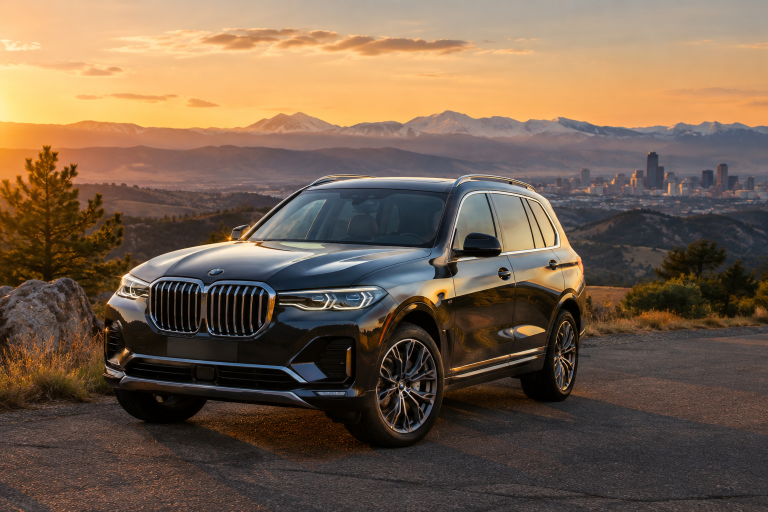
Luxury SUVs offer flexible cargo space, easier entry, a higher driving position, and available all-wheel-drive systems on many models. They can be especially useful for families and frequent mountain travelers. However, larger wheels, tires, insurance premiums, and fuel use can raise ownership costs.
Coupes and Convertibles
Coupes and convertibles suit buyers who prioritize design, driving engagement, and open-air trips through Colorado’s scenic areas. They may be less convenient when rear-seat access, cargo capacity, or carrying several passengers is a regular requirement.
3. Account for Colorado Road Conditions
Colorado weather should be part of the vehicle decision from the beginning. Evaluate tire condition and type, ground clearance, brake feel, visibility, and the capability of the drivetrain. All-wheel drive can support traction in certain conditions, but it does not replace suitable tires, cautious driving, or adequate stopping distance.
For mountain travel, drivers should understand when Colorado passenger vehicle traction and chain laws may apply. State rules can be activated when conditions warrant, so it is wise to keep approved traction equipment, warm layers, water, and other emergency supplies in the vehicle during winter travel.
4. Compare Comfort and Technology
Luxury should be evaluated through the features used every day, not just a long equipment list. During a test drive, adjust the seat, steering wheel, mirrors, and climate settings. Notice whether the seat support remains comfortable after more than a few minutes and whether the cabin stays quiet at highway speeds.
- Check camera views and parking-sensor alerts in a real parking situation.
- Pair a phone and test navigation, audio, and voice controls.
- Assess outward visibility, especially around roof pillars and rear corners.
- Review driver-assistance settings to make sure they are intuitive rather than distracting.
5. Pick a Powertrain That Fits Your Routine
Gasoline-powered vehicles remain convenient for long-distance travel because refueling is quick and widely available. Hybrid and plug-in hybrid models may suit drivers who want to complete shorter local trips with electric power while retaining gasoline flexibility for longer journeys.
Electric vehicles can work well when home charging and regular driving patterns align. Buyers should think through charging access, time at home, cold-weather range changes, and the planning needed for longer Colorado road trips. The goal is to select a powertrain that simplifies the owner’s schedule instead of adding friction to it.
6. Calculate the Full Cost of Ownership
Look beyond the monthly payment. A practical ownership budget should include the purchase price or lease terms, down payment, financing interest, insurance, registration, fuel or charging, tires, maintenance, repairs, and expected resale value.
For example, a lower-priced pre-owned vehicle may cost more over time if it needs specialized repairs, replacement tires, or deferred maintenance soon after purchase. Request realistic insurance estimates and research expected service needs before committing.
7. Compare New, Certified, and Pre-Owned Vehicles
New vehicles provide current features, full factory warranty coverage, and greater choice in color and equipment. Certified pre-owned vehicles can offer inspection standards and limited warranty benefits, but buyers should read the specific program terms because coverage varies.
Pre-owned vehicles often create access to more models and price points. Review maintenance records, title history, mileage, brake and tire wear, cosmetic condition, and remaining warranty coverage. An independent inspection can provide an additional perspective before finalizing a purchase.
8. Use a Practical Test-Drive Checklist
- Drive on city streets, highways, and uneven pavement when possible.
- Test low-speed steering, braking response, and parking maneuvers.
- Operate the climate controls, cameras, navigation, and audio system.
- Listen for wind noise, rattles, or suspension sounds.
- Bring regular passengers if rear-seat comfort is important.
- Write notes before driving another vehicle so details are easier to compare.
9. Review History, Recalls, and Vehicle Condition
A vehicle history report is useful, but it is not a replacement for a thorough inspection. Verify service documentation, title status, accident disclosures, tire condition, fluid leaks, and the operation of important electronics. Before completing a purchase, use the vehicle identification number to check for unrepaired safety recalls through the federal recall lookup tool.
10. Choose for the Colorado Life You Actually Drive
The best luxury vehicle for a Colorado driver balances comfort with everyday usefulness. By considering local weather, mountain travel, body style, technology, powertrain needs, long-term costs, and vehicle condition together, buyers can choose a vehicle that feels rewarding on Denver streets and ready for the road beyond them.