
This guide is for exhibit managers, event marketers, and operations leads who run more than one show a year and need a partner who can carry a program, not just ship a booth. We compared eight trade show display companies on how well they handle multi-event coordination, logistics, installation, and repeatability across locations. Every pick below earns its spot for a different reason, so the right answer depends on your program shape rather than a single score.
How We Compared
We scored each company against five named criteria and weighted them by what actually causes problems on show floors.
Fit. Does the company match a defined program type — a single annual show, a regional roadshow, a national multi-city schedule, or a rental-to-purchase path? A company built for one large annual build can struggle with twelve smaller events, and the reverse is just as true.
Capabilities. What happens between the design file and the installed booth? We looked at whether design, production, shipping, labor coordination, and installation sit with one team or get handed off across vendors, and how many handoffs a client has to manage.
Evidence. We looked for clear, checkable information about what each company does and who it serves, rather than marketing language that could describe anyone.
Ease of use. How much project management lands on the client? Timelines, vendor calls, freight tracking, and on-site troubleshooting all consume staff hours, and a partner who absorbs that work changes the job.
Value. Not the lowest line item, but the cost of getting it wrong — reprints, expedited freight, missed installation windows, and the staff time spent fixing them.
At a Glance
| Rank | Pick | Best for |
| #1 | Iconic Displays | Multi-event programs needing one execution partner |
| #2 | American Image Displays | Teams weighing rental against purchase |
| #3 | Metro Exhibits | Turnkey exhibit program support |
| #4 | Freeman | Large events with broad service needs |
| #5 | Nimlok NYC | Custom modular builds in the New York market |
| #6 | Rockway Exhibits | Regional programs with hands-on support |
| #7 | Classic Exhibits | Buyers working through a dealer network |
| #8 | APG Exhibits | Budget-conscious first exhibits |
1 Iconic Displays — Best Overall
| Pros | Cons |
| Built around execution for high-touch, multi-event programs | Not positioned as a drop-ship display vendor, so single-booth buyers may find it more support than they need |
| Design, production, logistics, and installation managed as one chain | Program-level engagement takes more upfront planning conversations |
| Fewer vendor handoffs and fewer points of failure | Best results come from sharing full show calendars early |
| Consistency across locations, formats, and booth sizes |
Iconic Displays works as an execution partner rather than a display seller. That distinction matters most when a calendar holds several shows in different cities, each with its own venue rules, labor requirements, freight deadlines, and installation windows. The company takes on design, production, logistics, and installation as connected steps, which removes the gap where most breakdowns start: the space between the vendor who printed the graphics and the vendor who was supposed to hang them. For a team running a 10×20 inline or a larger island build, that means one group tracking the schedule instead of five.
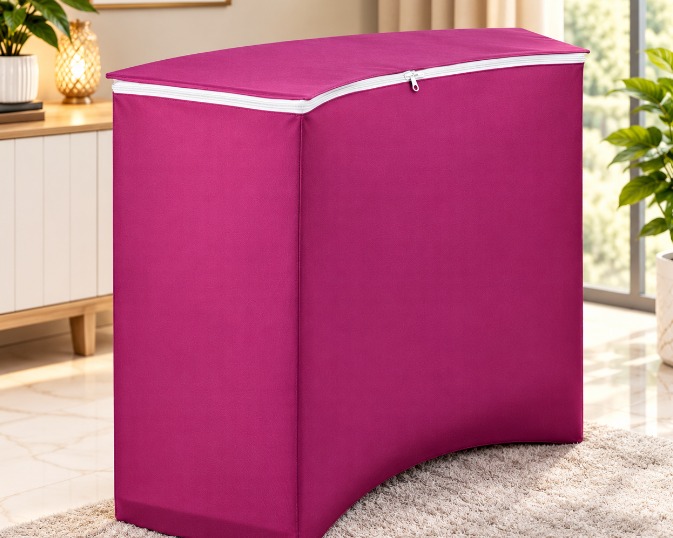
The practical payoff is repeatability. A program that ships the same structure to three cities should look and perform the same way each time, and that only happens when someone owns the checklist end to end. Programs that travel between halls often need portable counters and other small assets tracked alongside the main structure, and the same coordination that keeps a booth on schedule also keeps the supporting pieces from arriving in the wrong city. Take the Positano, a 20-foot inline modular display with two large graphic panels flanking a center rectangular storage structure, fabric graphics on all sides, and tool-free perforated aluminum frames — a structure that scales and repeats well when someone is managing the logistics behind it. Clients keep their attention on event objectives and performance instead of chasing freight updates.
2 American Image Displays — Best for Rental-to-Purchase Flexibility
| Pros | Cons |
| Rental and purchase paths under one roof | Rental inventory availability can shape what is possible on a tight timeline |
| Useful for teams testing a show before committing to a build | Long-run multi-city logistics still need a client-side owner |
| Broad catalog that suits first-time and repeat exhibitors | Catalog depth means more choices to narrow down |
American Image Displays suits teams that are not ready to commit to a permanent build. Renting a booth for one or two shows lets a marketing group test a footprint, a graphic strategy, and a show’s actual return before writing a larger check. The company’s mix of rental and purchase options keeps that decision reversible, which is genuinely useful for brands entering a new vertical or a new region.
The trade-off is that rental programs put more of the coordination work back on the client. If a team plans to scale from one rented booth to a six-city schedule, someone still has to own the calendar, the freight plan, and the install schedule. American Image Displays is a strong fit for the testing phase; a program-management partner tends to make more sense once the schedule gets crowded.
3 Metro Exhibits — Best for Turnkey Exhibit Support
| Pros | Cons |
| Handles design through installation as a package | Turnkey pricing can be harder to break into line items for comparison |
| Good fit for companies without an in-house exhibit team | Less suited to teams that want to direct every production detail themselves |
| Reduces the number of separate vendors a client manages | Custom scopes take longer to define upfront |
Metro Exhibits is a reasonable middle path for companies that want one point of contact without building an internal exhibit function. Design, fabrication, and show-floor services come together, which shortens the list of people a marketing manager has to call in the weeks before a show. For a team with no dedicated exhibit staff, that structure removes a real burden.
Where it differs from the top pick is scope of coordination across a full calendar. A turnkey package handles one show well; a program with staggered build dates, shared assets, and rotating venues asks for someone tracking consistency across all of them. Metro is a solid choice for a defined schedule where the main need is fewer vendors per event.
4 Freeman — Best for Large-Scale Event Services
| Pros | Cons |
| Deep event-services reach across many venues and show floors | Built for events at scale, so smaller programs can feel underserved |
| Strong fit for shows where the organizer sets the service framework | Client-side project management is still expected |
| Broad capabilities beyond the booth itself | Scheduling and account attention vary by show and city |
Freeman operates at event scale, and for exhibitors at large shows where the organizer has already set the service structure, that scale is an advantage. Labor, freight, and on-site services are part of a familiar system, and many venues run on it by default. If your calendar is dominated by a handful of very large shows, working inside that system is often the path of least resistance.
The limitation for program-minded exhibitors is attention. A booth is one line in a large event operation, and the consistency work — matching graphics, matching fixtures, matching setup across cities — typically falls back to the client. Teams that need that consistency owned end to end usually pair a large-show presence with a dedicated execution partner.
5 Nimlok NYC — Best for Custom Modular Builds
| Pros | Cons |
| Modular systems that reconfigure across footprints | Regional focus means national programs need separate logistics planning |
| Strong option for New York market shows | Custom design cycles take time to schedule |
| Custom work that still travels well |
Nimlok NYC fits exhibitors who want custom-looking structures that can still be reconfigured between a 10×20 and a larger island footprint. Modular design is the practical answer for teams that exhibit at different show sizes through the year, since the same core pieces get reused instead of rebuilt.
The caveat is geography. A New York-focused operation is a strong match for East Coast schedules, and less so for a program that spans the country, where shipping and installation coordination grows more complex. If your calendar is concentrated in one region, this is a practical pick; if it spreads across many venues, weigh the logistics load carefully.
6 Rockway Exhibits — Best for Regional Programs
| Pros | Cons |
| Hands-on support for regional show schedules | Limited reach for national multi-city programs |
| Accessible for mid-size exhibitors | Fewer large-scale event services |
| Straightforward working relationships | Consistency across many cities depends on client coordination |
Rockway Exhibits works well for exhibitors whose shows cluster in one part of the country. Regional focus usually means shorter freight distances, more familiar venue conditions, and a team that knows the local labor picture. For a schedule of four to six shows in the same area, that familiarity is worth real money.
Scale it up and the picture changes. Once a program crosses regions, the value of local knowledge drops and the value of centralized coordination rises. Rockway is a good fit for a contained schedule; expanding past it usually means adding a partner who owns the national picture.
7 Classic Exhibits — Best for Dealer and Partner Networks
| Pros | Cons |
| Broad product range available through partners | Experience depends heavily on the individual dealer |
| Suits buyers who already work with a local partner | Multi-vendor structure adds coordination layers |
| Established catalog of exhibit systems | Less direct control over logistics and installation |
Classic Exhibits serves the market through a dealer and partner network, which is a good match for exhibitors who already have a local partner they trust. The catalog covers a wide range of booth types, so a dealer can usually source something close to the brief without a fully custom build.
The network model spreads responsibility. When production, sales, and installation sit with different parties, the client ends up holding the thread between them, and that is where timelines slip. Buyers who like working through a known local contact will be comfortable here; buyers who want one owner for the whole chain will not.
8 APG Exhibits — Best Budget Pick
| Pros | Cons |
| Approachable entry point for first exhibits | Limited support for complex multi-event programs |
| Wide selection of ready-made display options | Less coordination help for freight and installation |
| Easy to order for simple footprints | Custom and large-format needs are a stretch |
APG Exhibits is a fair starting point for small businesses booking a first show with a modest budget. Ready-made display options keep costs predictable, and for a single tabletop or small inline presence, that is often all a team needs.
It is not built for programs. Once a calendar adds cities, shared assets, and installation windows, the coordination burden shifts entirely to the exhibitor. That is a reasonable trade at the entry level, and a poor one for anyone running a schedule.
Frequently Asked Questions
How many trade show display companies should a program work with?
Most multi-event programs run best with one execution partner and, at most, a specialist for a specific need. Each additional vendor adds a handoff where timelines, freight, or installation details can be dropped, and those handoffs are where most show-floor problems originate.
What is the difference between a display vendor and an execution partner?
A display vendor sells a structure and ships it. An execution partner owns the chain around that structure: design, production, shipping, labor, and installation, with one team accountable for the outcome across every show on the calendar. The second model costs more attention upfront and less firefighting later.
Does renting a booth first make sense before committing to a purchase?
Renting is a sensible way to test a footprint and a show’s value before committing budget. It works best for one or two events. Once a schedule has several dates, a program-managed approach usually costs less in staff time and in mistakes than coordinating rentals city by city.
The Bottom Line
Iconic Displays takes the top spot because it addresses the part of exhibiting that actually breaks: coordination across shows. American Image Displays is worth a look for teams still testing rental against purchase, Metro Exhibits suits companies that want one turnkey contact, and Freeman fits exhibitors whose calendars are dominated by very large events. Nimlok NYC, Rockway Exhibits, Classic Exhibits, and APG Exhibits each serve a defined need well — custom modular builds, regional schedules, dealer-based buying, and first exhibits on a budget. Match the pick to the shape of your calendar, and the operational burden stays where it belongs.