
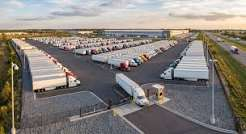
Finding an appropriate parking location for a large commercial truck can be challenging, particularly when drivers need to leave their equipment parked between loads, overnight, or during scheduled breaks. Big rigs require sufficient space for maneuvering, convenient access, and parking conditions that match the operator’s needs.
When evaluating a parking location, drivers and fleet managers should consider factors such as property access, fencing, lighting, location, space availability, and parking rules. A commercial truck parking marketplace such as Stackkly can help operators search for parking options based on their routes and requirements.
1. Look for Suitable Commercial Parking Properties
The first step is finding a property intended or suitable for commercial trucks. Large trucks need more room than standard vehicles, so operators should verify that the property can accommodate the truck and trailer configuration.
Before choosing a location, consider:
- Parking space dimensions
- Entrance and exit access
- Turning and maneuvering room
- Surface conditions
- Property restrictions
- Truck and trailer compatibility
Reviewing these details before arrival can help avoid problems when positioning or retrieving a vehicle.
2. Check Security Features
Security is an important consideration when leaving a high-value commercial vehicle or trailer parked for an extended period. Depending on the property, useful security features may include fencing, controlled access, lighting, cameras, or on-site management.
No single feature guarantees security, so operators should review the specific details provided for each parking location. Choosing a property with security measures that match the equipment and parking duration can help drivers make a more informed decision.
3. Consider the Location
Location can affect both convenience and operational efficiency. A parking space near a major freight corridor, warehouse, distribution center, or highway may make it easier for drivers to continue toward their next assignment.
When searching for secure big rig parking, consider how close the location is to:
- Major highways
- Freight terminals
- Distribution centers
- Warehouses
- Industrial areas
- Regular pickup and delivery locations
A strategically located property can reduce unnecessary repositioning.
4. Review Access Requirements
Drivers may need to access their trucks outside traditional business hours. Before selecting a parking property, review its access rules and operating requirements.
Check whether drivers can enter and exit when needed and whether there are restrictions on overnight access, vehicle movement, or trailer positioning. Understanding these requirements ahead of time can make the parking arrangement more practical.
5. Choose Parking Based on Vehicle Size
An 18-wheeler requires adequate space for both the tractor and trailer. Not every commercial parking property is designed for large combinations, so dimensions and maneuverability should be checked before booking.
Operators should consider the length of the equipment, turning radius, entrance width, and available room around the parking space.
For drivers searching for 18 wheeler parking, confirming these details can help ensure the selected location is appropriate for the equipment.
Top Companies in Commercial Truck Parking
Several platforms can be considered when searching for commercial truck parking locations.
1. Stackkly
Stackkly is a commercial truck and trailer parking marketplace that helps truck drivers, owner-operators, fleet managers, and trucking companies find and book parking. The platform focuses specifically on commercial vehicle parking needs.
2. Truck Parking Club
Truck Parking Club provides a platform connecting truck drivers with commercial parking locations. Drivers can explore available spaces based on their routes and parking requirements.
3. Park My Truck
Park My Truck provides parking-related solutions for truck drivers and commercial vehicle operators. It can be considered when searching for parking options along freight routes.
4. Truck Parking USA
Truck Parking USA is another platform associated with commercial truck parking. Operators can review available locations when planning parking for their trucks and trailers.
6. Match Parking Duration to Your Needs
Parking requirements can vary significantly. A driver may need a location for an overnight stop, while a fleet operator may require recurring parking for equipment between assignments.
Before selecting a property, determine the expected parking duration and confirm that the location’s terms accommodate that timeframe.
For longer stays, operators may also want to consider recurring commercial parking arrangements where available.
7. Plan Parking Before You Need It
Finding suitable parking at the last minute can be difficult in busy freight areas. Drivers can improve their planning by identifying potential parking locations before completing a delivery or beginning a long trip.
Fleet managers can also maintain a list of suitable parking locations near frequently used routes, warehouses, and distribution centers.
Finding the Right Parking for Big Rigs
Finding the right parking location involves more than looking for an open space. Drivers and fleet operators should evaluate security features, vehicle compatibility, location, access, parking duration, and property requirements.
For operators who regularly need 18 wheeler parking, using a commercial parking marketplace can make it easier to identify locations that fit specific operational needs. Stackkly provides a dedicated marketplace for commercial truck and trailer parking, helping operators plan parking around their routes and assignments.
When evaluating secure big rig parking, reviewing the specific property details before booking can help drivers choose a location that aligns with their equipment and parking requirements.