

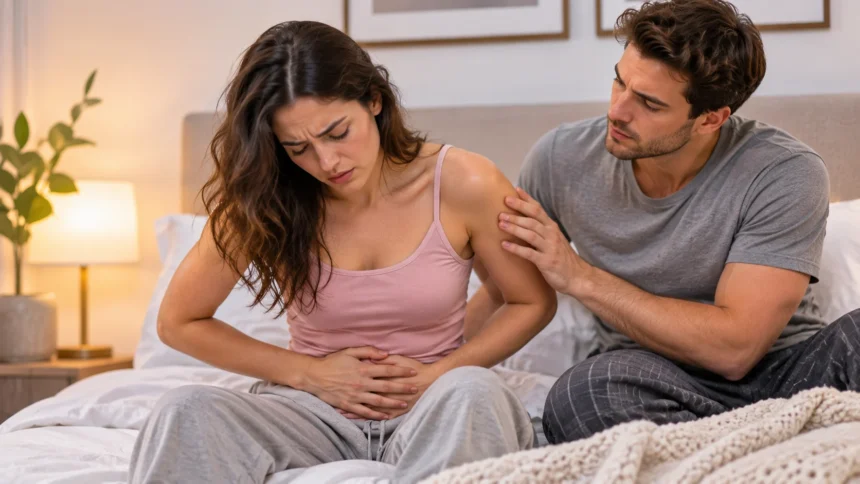
Stomach pain after sex can feel confusing, especially when the discomfort appears unexpectedly or continues after intimacy. Some people experience mild cramping in the lower abdomen, while others notice pressure, bloating, or pelvic discomfort. These symptoms can have several explanations, ranging from temporary muscle tension to medical conditions that require attention. Understanding possible causes can help you recognize when symptoms need evaluation.
Stomach hurting after sex is a common way people describe abdominal or pelvic discomfort following sexual activity. The pain may begin immediately, develop several hours later, or occur repeatedly. Although occasional mild discomfort may resolve without treatment, persistent or severe pain should not be ignored. This guide explains possible causes, symptom timing, warning signs, and practical ways to manage discomfort safely.
What Does Stomach Pain After Sex Mean?
Stomach pain after sex refers to discomfort in the abdomen or pelvic region that develops during or after sexual activity. The pain may feel like cramping, pressure, aching, or a sharp sensation. Its location and intensity can vary depending on the underlying cause. Some people experience discomfort around the lower abdomen, while others notice pain on one side.
Healthcare professionals often distinguish between abdominal pain and pelvic pain because they can involve different structures. The lower abdomen contains parts of the digestive, urinary, and reproductive systems. Muscles and nerves also contribute to sensations in this region. Because several structures are located close together, identifying the exact source of discomfort can be difficult without medical assessment.
Pain associated with sexual activity is sometimes described using the medical term dyspareunia. However, this term generally refers to pain during or around intercourse and does not identify one particular condition. Symptoms may involve muscular, reproductive, urinary, or digestive factors. Understanding the pattern of pain helps healthcare professionals determine which explanations require further investigation.
Common Causes of Stomach Hurting After Sex
Temporary muscular tension is one possible explanation for mild discomfort following sexual activity. Muscles around the abdomen, hips, and pelvic floor may contract during physical activity. If these muscles become uncomfortable or remain tense, they can contribute to aching or cramping. The sensation may gradually improve as the muscles relax.
Digestive factors can also contribute to abdominal discomfort that occurs around the same time as sexual activity. Gas, constipation, and bloating may create pressure or cramping in the abdomen. Changes in position or physical movement can make existing digestive discomfort more noticeable. However, timing alone does not prove that sexual activity caused the symptoms.
Other possible causes include urinary tract problems, pelvic floor dysfunction, infections, and certain reproductive health conditions. Some of these issues require medical treatment rather than simple home care. The likelihood of each cause depends on symptoms, medical history, and individual anatomy. Repeated or worsening discomfort should be assessed by a qualified healthcare professional.
Lower Abdominal Pain After Sex
Lower abdominal pain after sex may involve muscles, the bladder, digestive organs, or reproductive structures. Some people describe the sensation as menstrual-like cramps, while others notice pressure or tenderness. The pain may begin immediately after activity or develop later. Understanding whether it occurs repeatedly can provide useful information during medical evaluation.
For people with a uterus, conditions affecting the uterus, ovaries, or surrounding pelvic tissues may contribute to discomfort. Menstrual cycle changes and certain gynecological conditions can influence pelvic sensitivity. However, not every episode of lower abdominal cramping indicates a reproductive disorder. Other causes, including bowel or urinary problems, can produce similar symptoms.
People without a uterus may also experience lower abdominal pain associated with pelvic floor tension, urinary issues, or digestive conditions. Discomfort can sometimes involve muscles near the pelvis or lower abdomen. Because symptoms overlap across different conditions, self-diagnosis can be unreliable. Persistent pain deserves assessment regardless of sex or reproductive anatomy.
Why Does Your Stomach Hurt Immediately After Sex?
Pain that begins immediately after sexual activity may be associated with temporary muscle contractions or irritation of sensitive pelvic structures. Some people experience brief cramping that gradually becomes less noticeable. Others develop discomfort related to an existing condition. The timing provides a clue but cannot establish the cause by itself.
Pelvic floor muscles play a role in supporting pelvic organs and coordinating several bodily functions. When these muscles are excessively tense, discomfort may occur during or after sexual activity. Symptoms can include pelvic aching, pressure, or difficulty relaxing the muscles. A pelvic health professional can assess whether muscle coordination contributes to the problem.
Immediate pain should be taken more seriously when it is sudden, intense, or different from previous experiences. Severe discomfort may indicate a medical issue requiring urgent attention. Symptoms such as dizziness, fainting, or unusual bleeding increase concern. Rather than assuming the pain is muscular, seek medical assessment when warning signs are present.
Stomach Pain Several Hours After Sex
Abdominal pain may sometimes develop several hours after sexual activity rather than appearing immediately. Delayed discomfort can make it difficult to determine whether the activity and symptoms are related. Digestive problems, urinary issues, or menstrual cramps may begin around the same time. Recording the timing and location of pain can help clarify the pattern.
Muscular soreness may also become more noticeable after physical activity has ended. However, delayed abdominal pain should not automatically be attributed to muscle strain. Conditions affecting the urinary or reproductive systems may produce symptoms that develop or intensify over time. Additional signs can help determine whether further evaluation is necessary.
If discomfort repeatedly appears several hours after sex, discuss the pattern with a healthcare professional. Information about symptom duration, intensity, and associated changes may help guide evaluation. Pain accompanied by fever, vomiting, urinary symptoms, or unusual bleeding deserves prompt attention. Persistent or progressively worsening pain should not be managed through repeated self-treatment alone.
Can Pelvic Floor Tension Cause Stomach Pain?
The pelvic floor consists of muscles and connective tissues that support organs within the pelvis. These muscles must contract and relax appropriately during different bodily activities. When they remain overly tense or become difficult to relax, pelvic discomfort may develop. Some people experience symptoms during or after sexual activity.
Pelvic floor dysfunction can involve muscle weakness, excessive tension, or coordination difficulties. Individuals may experience lower abdominal aching, pelvic pressure, urinary symptoms, or discomfort during bowel movements. However, these symptoms can also arise from other conditions. A professional assessment helps determine whether pelvic floor muscles are contributing to the problem.
Treatment for excessive pelvic floor tension may involve relaxation training, breathing exercises, and individualized physical therapy. Strengthening exercises are not always appropriate when muscles are already overactive. Repeated forceful contractions can sometimes increase discomfort. Working with a qualified pelvic health physical therapist can help identify a suitable approach.
Can Menstrual Cycle Changes Affect Pain After Sex?
The menstrual cycle can influence how some people experience pelvic and lower abdominal sensations. Hormonal changes and normal reproductive processes may affect discomfort at different times of the month. Some people notice cramps around menstruation or ovulation. These symptoms can overlap with pain that occurs after sexual activity.
Ovulation-related discomfort may occur on one side of the lower abdomen during part of the menstrual cycle. However, one-sided pain can also result from other conditions. The timing of symptoms may provide helpful context but should not be treated as proof of ovulation pain. Sudden or severe one-sided pain requires medical evaluation.
Menstrual cramps can also occur independently of sexual activity and may become noticeable afterward. If pain follows a recurring cycle-related pattern, documenting those changes may help during a healthcare appointment. However, severe menstrual pain or pain that disrupts daily activities deserves assessment. Conditions such as endometriosis may require specific evaluation and treatment.
Endometriosis and Pain After Sexual Activity
Endometriosis is a condition in which tissue similar to the uterine lining grows outside the uterus. It can cause pelvic pain, menstrual discomfort, and pain associated with sexual activity. Some individuals also experience bowel or bladder symptoms. The severity of symptoms varies, and some people have relatively few noticeable problems.
Pain related to endometriosis may occur during sexual activity or continue afterward. It can feel like deep pelvic aching, cramping, or discomfort in the lower abdomen. However, these symptoms are not unique to endometriosis. Other conditions may produce similar patterns, so a medical evaluation is necessary for accurate diagnosis.
Management depends on symptom severity, personal circumstances, and clinical findings. Healthcare professionals may discuss medication, pelvic physical therapy, or other treatment options when appropriate. People should not assume recurring pelvic pain is something they must tolerate. Seeking evaluation can help identify the cause and support more effective symptom management.
Ovarian Cysts and Lower Stomach Discomfort
Ovarian cysts are fluid-filled sacs that can develop within or on the surface of an ovary. Many are harmless and resolve without treatment. However, some may cause pelvic pressure, bloating, or lower abdominal discomfort. Symptoms can sometimes become noticeable during or after physical activity, including sexual activity.
Pain associated with an ovarian cyst may occur on one side of the lower abdomen. The discomfort can vary from mild aching to more significant pain. However, one-sided pain does not confirm that a cyst is present. Healthcare professionals may use an examination and imaging tests when symptoms suggest an ovarian condition.
Sudden severe pelvic pain, especially with nausea, vomiting, dizziness, or fainting, requires emergency medical attention. These symptoms can occur with conditions such as ovarian torsion or a ruptured cyst with complications. Immediate assessment is important because some causes require urgent treatment. Do not attempt to manage severe symptoms with home remedies alone.
Can Urinary Tract Infections Cause Pain After Sex?
Urinary tract infections occur when bacteria infect part of the urinary system. Common symptoms include burning during urination, frequent urinary urges, and discomfort in the lower abdomen. Some people notice symptoms around the time of sexual activity. However, abdominal pain alone is not sufficient to diagnose a urinary tract infection.
Sexual activity can be associated with urinary tract infections in some individuals. Bacteria may enter the urinary tract, potentially contributing to infection. However, symptoms can also develop independently of sexual activity. A healthcare professional may recommend urine testing when an infection is suspected.
Treatment depends on the type and severity of the infection. Bacterial urinary tract infections often require appropriate antibiotic treatment. Fever, back pain, vomiting, or worsening symptoms may indicate a more serious infection requiring prompt care. Drinking water may support general hydration, but it should not replace medical treatment when an infection is present.
Sexually Transmitted Infections and Pelvic Pain
Certain sexually transmitted infections can cause pelvic or lower abdominal discomfort. Some infections produce few or no symptoms, while others may involve unusual discharge, painful urination, or bleeding. Pain associated with sexual activity can sometimes occur when inflammation affects reproductive or urinary structures. Symptoms alone cannot reliably identify a specific infection.
Pelvic inflammatory disease is an infection-related condition affecting parts of the upper reproductive tract. It can develop as a complication of certain infections and may cause lower abdominal pain, fever, or unusual bleeding. Early treatment is important because untreated infection can lead to complications. A healthcare professional can determine whether testing or treatment is needed.
If an STI is possible, confidential testing and appropriate medical care are important. Some infections can be treated effectively when identified. Avoid relying on visual symptoms or home remedies to determine whether an infection is present. Professional evaluation helps clarify the cause of discomfort and supports timely, appropriate treatment.
Can Digestive Problems Cause Stomach Pain After Sex?
Digestive conditions can cause abdominal pain that happens to occur after sexual activity. Gas, constipation, and bloating may produce pressure or cramping in different parts of the abdomen. Physical movement can sometimes make existing discomfort more noticeable. However, symptoms that occur after sex are not necessarily caused by the digestive system.
Irritable bowel syndrome is one condition that can involve recurring abdominal pain and changes in bowel habits. Some people experience symptoms that fluctuate with stress, meals, or other daily factors. These symptoms may overlap with pelvic discomfort. A healthcare professional can help determine whether digestive conditions contribute to repeated abdominal pain.
Severe or persistent digestive symptoms should not be dismissed as ordinary bloating. Significant abdominal tenderness, repeated vomiting, or blood in the stool may require urgent evaluation. Sudden intense pain can also indicate conditions unrelated to digestion. Identifying associated symptoms helps healthcare professionals choose appropriate investigations and treatment.
Stomach Pain After Sex During Pregnancy
Pregnancy can involve changes in the uterus, pelvic muscles, ligaments, and surrounding tissues. Some pregnant people experience mild cramping after sexual activity. However, abdominal pain during pregnancy should be interpreted carefully because several conditions can produce similar symptoms. The timing and severity of discomfort are important considerations.
Mild, brief discomfort may not indicate a serious problem, but persistent or worsening pain should be discussed with a pregnancy care professional. Symptoms such as vaginal bleeding, fluid leakage, or regular painful contractions require prompt medical advice. Individual pregnancy complications may also affect which activities are appropriate. Personalized guidance is more reliable than general assumptions.
Severe abdominal pain during pregnancy requires urgent medical assessment, particularly when accompanied by dizziness, fainting, or bleeding. In early pregnancy, these symptoms can sometimes indicate an ectopic pregnancy or another emergency. Do not wait for symptoms to resolve when serious warning signs appear. Prompt evaluation helps protect health and supports appropriate treatment.
How to Relieve Mild Stomach Pain After Sex
When abdominal discomfort is mild and no warning signs are present, taking a break from aggravating activity may help. Resting in a comfortable position and allowing tense muscles to relax can provide temporary relief. Gentle breathing may also reduce feelings of muscular tension. However, these measures do not treat underlying infections or other medical conditions.
A comfortably warm compress may help some people experiencing mild muscle-related cramps. Use a protective layer and avoid excessive heat, especially during pregnancy or when sensation is reduced. Gentle walking may also feel comfortable when digestive bloating contributes to symptoms. Stop any activity that increases pain or produces unusual sensations.
Avoid taking repeated medication or using home remedies to conceal persistent symptoms without understanding their cause. Appropriate pain relief depends on medical history, pregnancy status, and the suspected condition. A pharmacist or healthcare professional can advise on suitable options. Recurrent or worsening discomfort should be investigated rather than managed indefinitely through temporary relief measures.
Helpful Tips for Preventing Repeated Discomfort
Paying attention to symptom patterns can help identify possible contributing factors. Notice whether discomfort occurs consistently, appears at a particular time in the menstrual cycle, or accompanies urinary or digestive symptoms. A simple symptom record can provide useful information for a healthcare appointment. However, tracking should support understanding rather than encourage constant worry.
Communication and personal comfort are also important during intimate activities. Pain should not be ignored or treated as something that must be tolerated. Stopping activities that cause discomfort and respecting personal boundaries can help prevent unnecessary aggravation. If pain repeatedly occurs, professional evaluation is more useful than repeatedly experimenting with activities that trigger symptoms.
General pelvic health habits may also support comfort. Regular physical activity, appropriate hydration, and managing constipation can help with some contributing factors. However, these habits cannot prevent every medical cause of abdominal pain. A healthcare professional can recommend specific prevention or treatment strategies after identifying the underlying issue.
When Should You Worry About Stomach Pain After Sex?
Seek emergency medical attention for sudden severe abdominal or pelvic pain, especially when accompanied by fainting, significant dizziness, or heavy bleeding. These symptoms may indicate a condition requiring urgent treatment. Severe one-sided pelvic pain with vomiting also deserves emergency assessment. Do not assume intense pain will improve without medical care.
Prompt medical evaluation is important when pain occurs with fever, unusual discharge, painful urination, or worsening abdominal tenderness. These symptoms may indicate an infection or another condition requiring treatment. Pregnancy-related pain also deserves particular caution. If pregnancy is possible and severe pain or bleeding occurs, emergency evaluation may be necessary.
Even without emergency symptoms, recurring pain after sex should be discussed with a healthcare professional. Persistent discomfort can affect daily life and may involve a treatable condition. A clinician can review symptoms, perform an appropriate examination, and recommend testing if needed. Early assessment can reduce uncertainty and help prevent avoidable complications.
What to Expect During a Medical Evaluation
A healthcare professional will usually begin by asking about the location, timing, and intensity of the pain. They may also ask about menstrual patterns, urinary symptoms, digestive changes, and relevant medical history. These questions help identify possible causes. You can share only what you are comfortable discussing while still explaining the symptoms accurately.
Depending on the situation, the clinician may recommend a physical examination or appropriate tests. These might include urine testing, pregnancy testing, infection screening, or imaging when medically indicated. Not every person requires every test. The evaluation should be based on individual symptoms and clinical findings.
Treatment depends on the diagnosis rather than the timing of pain alone. Some conditions improve with conservative care, while others require medication, physical therapy, or additional medical treatment. A clear explanation of the findings can help you understand the next steps. Follow-up may be necessary when symptoms persist or the initial evaluation does not establish a cause.
Conclusion
Stomach hurting after sex can have several possible explanations, including muscular tension, digestive discomfort, urinary problems, and reproductive health conditions. The pain may appear immediately or several hours later, and its intensity can vary considerably. Mild discomfort sometimes resolves with simple comfort measures. However, recurring or severe symptoms should not automatically be considered normal.
Understanding the location, timing, and associated symptoms can help determine when medical attention is appropriate. Gentle rest and warmth may provide temporary relief for mild cramps, but they do not address every underlying cause. Persistent pelvic pain, urinary symptoms, fever, or unusual bleeding deserves professional assessment. The safest approach is to respond to symptoms rather than assume one explanation.
Most importantly, pain associated with sexual activity should be taken seriously when it affects comfort or daily life. You do not need to continue activities that cause discomfort. A healthcare professional can help identify treatable conditions and recommend suitable care. Recognizing warning signs and seeking timely support can help protect long-term pelvic and abdominal health.
Frequently Asked Questions (FAQs)
Why Does My Stomach Hurt After Sex?
Stomach pain after sex may result from muscle tension, digestive issues, urinary infections, or certain pelvic conditions. The underlying cause depends on pain location, timing, severity, and other symptoms.
Is It Normal to Have Lower Stomach Cramps After Sex?
Mild, brief cramping can sometimes occur, but persistent or recurring pain should not be ignored. Severe cramps, unusual bleeding, fever, or worsening symptoms require prompt medical evaluation.
How Long Should Stomach Pain Last After Sex?
Mild discomfort may improve within a short period, but there is no universal normal duration. Pain that persists, becomes severe, or repeatedly returns should be assessed by a healthcare professional.
Can a Urinary Tract Infection Cause Stomach Pain After Sex?
Yes, a urinary tract infection can cause lower abdominal discomfort, frequent urination, and burning during urination. Testing may be needed to confirm the infection and determine appropriate treatment.
When Should I Seek Emergency Care for Pain After Sex?
Seek emergency care for sudden severe abdominal pain, fainting, heavy bleeding, or intense one-sided pelvic pain with vomiting. Severe pain or bleeding when pregnancy is possible also requires urgent assessment.